
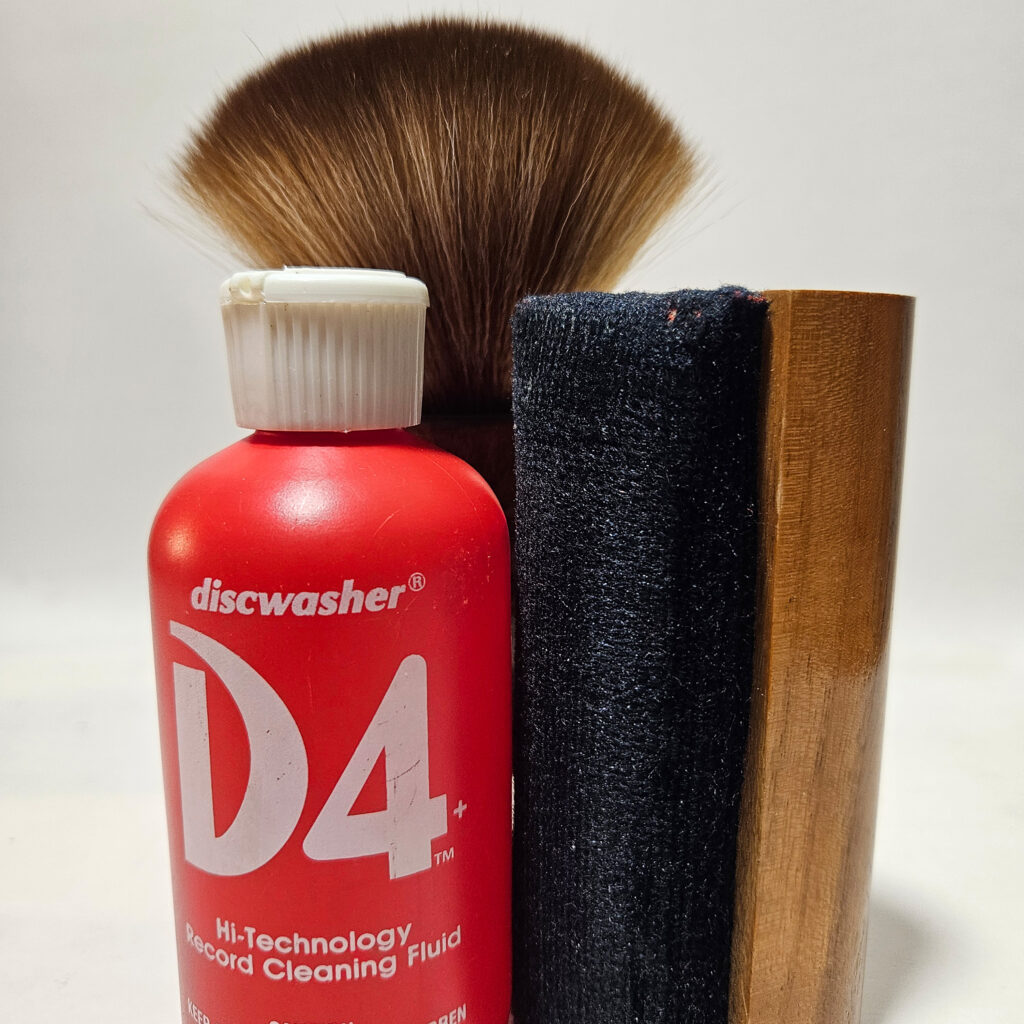
Cleaning vinyl records is about preservation first, sound quality second. Dirt, dust, and debris don’t just create noise, they accelerate wear every time a stylus drags that contamination through a groove. A record that looks “mostly clean” can still be grinding microscopic grit into itself on every play. That’s why proper cleaning isn’t optional if you actually care about your records lasting, and it’s why half-measures tend to cause more harm than good.
Let’s get this out of the way: dry cleaning alone is usually a recipe for static and noise. Carbon fiber brushes have their place, but they don’t remove embedded debris, oils, or residue — they mostly redistribute it. Worse, aggressive dry brushing can charge a record with static, turning it into a dust magnet the second you put it back on the platter. If a record already has contamination in the groove, dragging a dry brush across it just polishes the problem.
Ultrasonic cleaning, when used appropriately, is extremely effective but it’s not magic. It excels at removing deeply embedded debris that manual methods can’t reach, and we use it selectively on records that are worth the effort. What it doesn’t do is fix groove damage, erase scratches, or resurrect records that have lived hard lives. That distinction matters, and anyone telling you otherwise is selling something.
Here’s What We Do And Why We Do It
First a record is pulled from whatever sleeve and inner sleeve is there and it gets the manual cleaning of it’s life. We use our own custom formula, that we’ve made for two reasons, one, it’s better than anything we’ve found, two, we need a LOT of recording cleaning solution when we list between 50 and 100 records daily. Every day. Once it’s cleaned and dried, it goes to ultrasonic cleaning for 30 minutes of rotating and ultrasonic debris removal. For experiments, we’ve put brand new, MINT records in for cleaning, we STILL get slag out of them. Even a brand new record needs a significant cleaning for maximum fidelity.
Wet cleaning is where real results begin, provided it’s done gently and intelligently. The goal is not to scrub a record into submission; it’s to loosen and lift contaminants so they can be removed without grinding them deeper. A proper fluid, distilled water, and a soft applicator will do more good in one careful pass than endless dry brushing ever will. Less pressure, more patience. Always.
One of the most common mistakes we see is overusing alcohol-heavy solutions. While small amounts of isopropyl alcohol are often included in commercial cleaners, high concentrations can dry out vinyl and damage older formulations, especially on vintage pressings. Tap water is even worse; minerals and additives leave residue behind that’s audible and visible over time. Distilled water exists for a reason; this is it.
Inner sleeves play a far bigger role in cleanliness than most people realize. Putting a freshly cleaned record back into a dusty, acidic paper sleeve is like washing your hands and then wiping them on the floor. Poly-lined or rice paper sleeves dramatically reduce static and keep contaminants from reattaching between plays. This single upgrade does more to preserve records long-term than most cleaning rituals.
How often you clean a record depends on how it’s used, not how obsessive you feel. New purchases should always be cleaned before their first play. Records that live in clean sleeves and are handled carefully don’t need constant attention. Over-cleaning can be just as harmful as neglect, especially if heavy pressure or aggressive methods are involved. Clean when there’s a reason, not out of habit.
At SRO Records, cleaning and grading are inseparable concepts. We don’t clean records to inflate grades, and we don’t grade records based on theoretical best-case outcomes. Cleaning reveals the truth of a record’s condition – good or bad – and that honesty is what protects buyers. A clean record should sound better, yes, but more importantly, it should tell you exactly what it is.
