Auguste Wiegand - Biography & Vinyl Records | SRO Records SRO Records
Austin, Texas US    New & Used Vinyl    30-Day Return Guarantee
Contact Us    Fast, Secure International Shipping

Artist

Saturday, March 7, 2026

Explore More Artists

A B C D E F G H I J K L M N O P Q R S T U V W X Y Z #
Auguste Wiegand

Auguste Wiegand

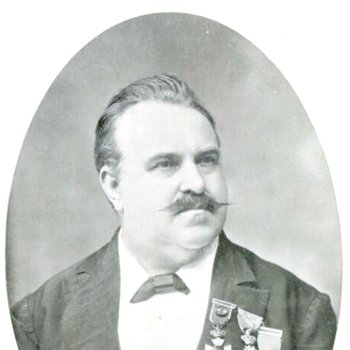
Wiegand Auguste (1849-1904) was a notable Belgian organist, pianist, and composer. Born in Liège on January 14, 1849, he passed away in Oswego, United States, in May 1904.

Chevalier Auguste Wiegand holds the distinction of being the first Sydney City Organist, a role he occupied for a decade from 1891 to 1900. He arrived in Sydney in June 1891 and quickly presented the Council with a list of over 200 works, which he organized into his initial 20 programmes.

Wiegand's inaugural concerts drew immense audiences and have become legendary. His repertoire was impressively diverse; while he often performed compositions by Bach and other classical luminaries, he also demonstrated a flair for engaging with the public. His programmes included a mix of sacred, operatic, and popular music, seamlessly blending the Hallelujah Chorus with Rule Britannia, excerpts from Carmen with God Save the Queen, a Bach fugue, and dynamic storm effects.

Wiegand began his studies at the Conservatoire Royal de Liège in 1859, where he earned a first prize in harmony-counterpoint under E. Soubre, a silver medal for organ in 1868, and gilded silver medals for both piano and organ in 1869 under J. Duguet. Following his studies, he assisted his former teacher from 1869 to 1873 and also took on a teaching role in piano. He furthered his training in Brussels with J.-N. Lemmens and A. Mailly, who had established an organ course independently at the Karmelietenkerk.

His international career began promptly, with performances in cities including Brussels, Aachen, Amsterdam, London, Paris, Sheffield, and New York. Notably, during the 1878 World's Fair in Paris, he performed works by J.S. Bach, F. Chopin, A. Guilmant, L. Lefébure-Wély, and A. Mailly. Between 1883 and 1886, Wiegand spent three years in Antwerp, where he played various Anneesens organs in Antwerp, Ghent, and Geraardsbergen. He then resided in Ostend, serving as the organist at the Sint-Petrus-en-Pauluskerk from 1886 to 1889, and also performing at the Kursaal during the summer seasons of 1888 and 1889. Here, he gained renown for his fantasy and genre pieces, as well as his virtuosic arrangements. His Kursaal repertoire included works by J.S. Bach, A.-E. Batiste, G. Braga, J. Grison, A. Guilmant, G.F. Händel, A. Mailly, and his own compositions.

In 1891, Wiegand settled in Australia and was appointed Sydney's City Organist, where he played on what was then the largest organ in the world, giving over 1,700 concerts. He also composed fantasy pieces and created numerous arrangements. He remained in this role until 1900 before relocating to London. Tragically, during a tour in the United States, he passed away unexpectedly in Oswego. Wiegand's arrangements included works by G. Bizet, F. de Mol, A. Dupont, G.F. Händel, G.B. Martini, F. Mendelssohn, L. van Beethoven, and G. Verdi. Among his compositions are organ works such as Berceuse, Bouquet de fleurs (schottisch), Elévation, Gran Marcia del Rey de España, Improvisation et marche finale, Invocation, Marche Sainte-Cécile, Marche triomphale, Prayer on the Ocean, Pastorale, Prières, Romance sans paroles (Gondola), Meditation on the Lake of Galilee, The Storm Idylle (1900), and Waratah (valse de salon). Additionally, he composed a four-part mass with organ accompaniment, La Harpe de Sainte-Cécile for organ and harp/piano (1904), as well as orchestral works including Marche solennelle and Sérénade italienne.

Bibliography: - Gregoir, E., ‘Wiegand, Auguste’, in Les artistes-musiciens belges au XVIIIme et au XIXme siècle, Brussels (etc.), 1885, pp. 476-477. - Casier, A., Het muziekleven in het Kursaal te Oostende tussen 1852 en 1914, unpublished Lic. Verh., KUL, Leuven, 1984, pp. 352-355. - Hostyn, N., ‘Wiegand, Auguste’, in Nationaal Biografisch Woordenboek, vol. 11, Brussels, 1985, cols. 832-835. - Lannoo, L. and D’Hooghe, K., West-Vlaamse Orgelklanken, Bruges, 1997, p. 122. - Félix, Jean-Pierre. Orgues, organistes et maîtres de chapelle à l'église SS. Pierre et Paul à Ostende (XVIe-XXe S.). Brussels, 1981, 76 pp. (Melanges d'organologie, III). - J.P. Félix, Le Chevalier Auguste Wiegand (1849-1904). - Lexicon van de muziek in West-Vlaanderen, Bruges, vol. 6, 2005. - F. Roquet, Lexicon Vlaamse componisten geboren na 1800, Roeselare, 2007.

Browse by Era

Latest Vinyl News

Hey Colossus – Heaven Was Wild

Hey Colossus Heaven Was Wild A new record from the noise rock stalwarts will always have us pricking up our ears at tQ towers, but despite a newfound sense of joy and even a certain swagger, this...

The QuietusReviews
Read Full Article

Albums by Auguste Wiegand

No products currently available for this artist. Check back soon!

On This Day in Music History

The Rolling Stones Release 'Get Yer Ya-Ya's Out!' (1970)

On March 7, 1970, rock history was made when The Rolling Stones released their acclaimed live album, 'Get Yer Ya-Ya's Out!' Recorded during their 1969 U.S. tour, this iconic album captured the raw energy of the band during one of their most electrifying periods. Featuring classic tracks like 'Jumpin' Jack Flash' and 'Sympathy for the Devil,' the album stands as a testament to the Stones' status as rock legends. Upon its release, it topped the charts in both the U.S. and the U.K., reaching No. 6 on the U.S. Billboard 200 and No. 1 in the U.K. Albums Chart.

The album was also notable for its distinctive cover art, designed by Robert Frank, which displayed the band's rebellious spirit. Its vinyl format became a must-have for collectors, with those seeking the original pressing often finding it a worthy treasure amongst their collections. Limited vinyl releases of 'Get Yer Ya-Ya's Out!' have since been produced, making it a staple for any rock aficionado.

Critics praised the album for its raw sound, a stark contrast to the more polished studio albums of the era, showcasing the band's ability to capture the live concert experience on vinyl. Songs like 'Midnight Rambler' showcased Mick Jagger's dynamic vocal performance while Keef's guitar work resonated with fans and musicians alike, influencing countless rock artists that followed.

The legacy of 'Get Yer Ya-Ya's Out!' is undeniable; it not only reaffirmed The Rolling Stones as one of the most influential bands of their time but also solidified the importance of live albums in the music industry. Its impact continues to shape live recordings today, reminding fans of the thrill and spontaneity that only a live performance can deliver.

Rock The Rolling Stones

Album of the Week

Grunge

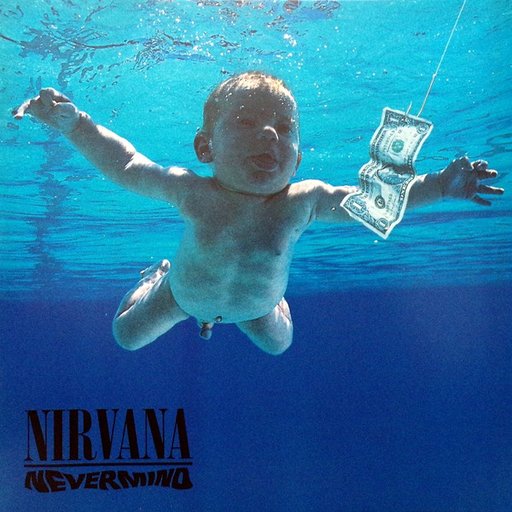
Nevermind (1991)

Nirvana
Nevermind by Nirvana

Released on September 24, 1991, Nirvana's 'Nevermind' marked a seismic shift in the music landscape, propelling grunge into the mainstream. Recorded in just a few weeks at Sound City Studios in Los Angeles, the album was produced by Butch Vig and captured the raw energy of the early '90s alternative scene. Upon its release, 'Nevermind' received overwhelming critical acclaim and commercial success, eventually replacing Michael Jackson's 'Dangerous' at the top of the Billboard 200 chart, a testament to its cultural impact. The album is celebrated for its innovative sound, blending punk rock's aggressive energy with melodic hooks, epitomizing the ethos of Generation X. Tracks like 'Smells Like Teen Spirit' and 'Come As You Are' resonate with listeners for their powerful lyrics and dynamic instrumentation. The opening track, 'Smells Like Teen Spirit,' became an anthem of disaffected youth and is widely regarded as one of the greatest songs of all time. Another standout, 'Lithium,' showcases Kurt Cobain's ability to juxtapose quiet introspection with explosive choruses, while 'Come As You Are' features a memorable guitar riff that perfectly encapsulates the album's essence. For collectors, original pressings of 'Nevermind' are highly sought after, especially those released on the DGC label in 1991. Look for variations such as the first press with the 'blue' label and the later 'green' label reissues. Matrix numbers to note include the first pressing with 'DGC-24425' etched in the dead wax. Current values for original pressings can range from $20 in lesser condition to upwards of $300 for mint copies, while reissues typically fall in the $20-$40 range. Condition is crucial for this album, as surface scratches can severely impact playback. Collectors are drawn to 'Nevermind' not just for its iconic status but also for its role in shaping the music of a generation. With its gritty sound and profound lyrics, this Nirvana record remains a cornerstone of any vinyl collection, ensuring its place as a timeless classic.

Standout Tracks:
  • Smells Like Teen Spirit
  • Lithium
  • Come As You Are
Pressing Notes: Look for original pressings on DGC with blue labels and the matrix number DGC-24425.
Value: $20-$300 Collectibility: High

Vinyl Collector Tip #66

Cleaning

Mastering Vinyl Care for Longevity

Proper vinyl care is essential for preserving the quality and value of your record collection. Dust, fingerprints, and grime can accumulate on your records, leading to sound degradation and potentially diminishing their worth. By investing a small amount of time and effort into cleaning your vinyl, you can preserve records that may hold a value of $100 or more. Start by using a carbon fiber brush before each play to remove surface dust, which can prevent scratches and static build-up. For deeper cleaning, consider a cleaning solution specifically designed for vinyl records; homemade solutions can sometimes do more harm than good. Apply the cleaner with a microfiber cloth, working in a circular motion from the center outwards, and always ensure your records are completely dry before storing them vertically in a cool, dry place. This process not only enhances sound quality but also extends the lifespan of your vinyl, ensuring that your investment remains intact for years to come. Remember, the better care you take of your vinyl, the better it will sound and the longer it will last. If you ever encounter stubborn dirt, a record cleaning machine can be a worthwhile investment for a serious collector, providing professional-level results that can restore your records to their original glory.

Pro Tip: For stubborn grime, consider using a vacuum-based record cleaning machine for optimal results.

Vinyl Market Pulse

↑ Up

Heavy Metal Vinyl: Market Trends for 2026

The vinyl market for Heavy Metal records has shown significant movement in 2023, with prices for original pressings soaring to over $200, a stark increase from around $50 just last year. This surge is driven by a combination of nostalgia and the resurgence of interest in classic albums, especially following the passing of iconic artists and the release of documentaries celebrating Heavy Metal's legacy. As collectors seek to own a piece of music history, albums from titans like Black Sabbath and Metallica have become especially sought after.

Reissues of classic albums continue to attract attention, particularly colored and limited editions, which often sell out quickly and fetch high secondary market prices. For collectors looking to invest, focusing on first pressings or unique variants can yield substantial returns.

As for actionable advice, consider selling lesser-known pressings now while demand is high and reinvesting in highly coveted titles; for instance, a first pressing of Iron Maiden's "The Number of the Beast" is fetching upwards of $300.

Looking ahead, the outlook remains positive as the Heavy Metal fanbase continues to grow, suggesting that prices for key titles will likely continue to rise in the coming years.

Invest wisely and stay attuned to market shifts to capitalize on these collecting trends.

Hot Artists: Black Sabbath, Metallica, Iron Maiden

Genre Spotlight

Classical

The Essential Guide to Classical Vinyl Collecting

Classical vinyl collecting is a rewarding hobby that immerses enthusiasts in the rich tapestry of musical history. The origins of classical music can be traced back to the medieval period, evolving through the Renaissance and Baroque eras, leading to the Golden Age of Classical music from the late 18th to early 19th century. This period saw the rise of pivotal movements such as Romanticism and Impressionism, which greatly influenced the way music was composed and appreciated.

Essential artists in the classical genre include:
1. Ludwig van Beethoven - A key figure in the transition between the Classical and Romantic eras, known for his symphonies and piano sonatas.
2. Johann Sebastian Bach - Renowned for his intricate compositions in the Baroque style, including the "Brandenburg Concertos."
3. Wolfgang Amadeus Mozart - A prolific composer who mastered various forms, contributing significantly to opera and chamber music.
4. Pyotr Ilyich Tchaikovsky - Famous for his ballets like "Swan Lake" and "The Nutcracker," Tchaikovsky's emotional depth resonates with audiences.
5. Claude Debussy - A pioneer of Impressionism, Debussy's works, like "Clair de Lune," evoke rich atmospheres and textures.
6. Igor Stravinsky - Known for revolutionary compositions such as "The Rite of Spring," which transformed the landscape of classical music.
7. Gustav Mahler - His symphonies are celebrated for their emotional breadth and orchestral innovation.

For collectors, must-own albums include:
- "Beethoven: Symphony No. 9" by Herbert von Karajan, 1962, Deutsche Grammophon.
- "Bach: The Well-Tempered Clavier" by Glenn Gould, 1970, Columbia Records.
- "Tchaikovsky: The Nutcracker Suite" by Chicago Symphony Orchestra, 1979, RCA.
- "Debussy: Orchestral Works" by Charles Dutoit, 1987, Decca.
- "Stravinsky: The Rite of Spring" by Leonard Bernstein, 1958, Columbia Masterworks.

When collecting classical vinyl, it's crucial to pay attention to pressing information, labels, and rare variants. Look for original pressings from respected labels like Deutsche Grammophon, RCA, and Columbia, as these often command higher prices and can provide superior sound quality. Special editions, colored vinyl, or limited releases can also be valuable.

In today's market, classical vinyl collecting is experiencing a renaissance, with prices ranging from $20 for common records to upwards of $500 for rare editions. Collectibility is currently high, driven by a renewed

Featured Rarity

Why This Album Is Worth Thousands

The Dark Side of the Moon by Pink Floyd (1973)

The collectibility of Pink Floyd's "The Dark Side of the Moon" is legendary among vinyl enthusiasts. Released in 1973, this album is not only a sonic masterpiece but also a prized possession for collectors. What elevates its value is the original UK pressing on Parlophone, which can fetch anywhere from $150 to an astounding $25,000, depending on its condition and specific variances. First pressings featuring the 'Gramophone Co. Ltd.' label and the matrix numbers A-1 and B-1 are particularly sought after, especially those with the early 'black triangle' cover variant.

An interesting nugget of trivia: the original release was immediately met with overwhelming acclaim, but few know that the first pressings were prone to a notorious error on the label, which misprinted the track listing on side two. This misprint makes those variants even more desirable. Collectors should be vigilant when searching for these rarities—look for the correct label details and the iconic running time etched in the deadwax.

The original pressings possess a warmth and depth that digital formats struggle to replicate, making them essential for any serious vinyl collector. As the years pass, the allure of owning a piece of music history only intensifies. Whether you’re new to vinyl collecting or a seasoned aficionado, securing a first pressing of "The Dark Side of the Moon" should be at the top of your list. Its immersive experience and rich backstory make it a must-have for anyone passionate about rare records!

Current Market Value: $150-$25,000