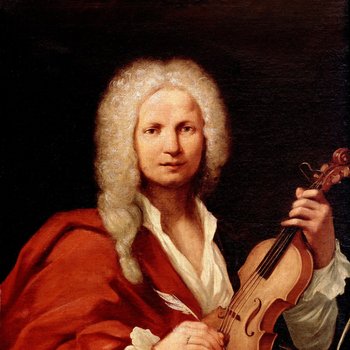
Italian Baroque composer, virtuoso violinist, educator, and cleric, Antonio Vivaldi was born on March 4, 1678, in the Sestiere di San Marco, within the Republic of Venice, Italy. He passed away on July 28, 1741, in Kärntnertor, Vienna, Austria.
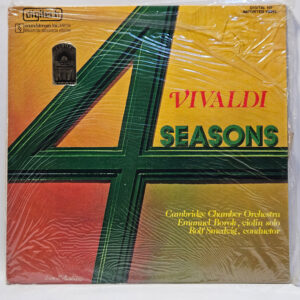
Vivaldi is regarded as one of the foremost composers of the Baroque era, whose influence extended widely throughout Europe during his lifetime. He is particularly celebrated for his numerous instrumental concertos for violin and various other instruments, alongside sacred choral compositions and over forty operas. His most renowned work is a collection of violin concertos titled "The Four Seasons."
The path to Vivaldi's illustrious career as a violinist and composer appeared almost predetermined. His father, Giovanni Battista Vivaldi, was a founding member of the Sovvegno dei musicisti di Santa Cecilia, an early musicians' collective, with Baroque operatic composer Giovanni Legrenzi serving as its president. As a child, Vivaldi accompanied his father on violin during performances throughout Venice, likely influenced by Legrenzi, who became maestro di cappella at St. Mark's Basilica in 1681.
Vivaldi, sharing his father's red hair, began training for the priesthood in 1693 and was ordained in 1703. Due to health issues, he was unable to fulfill his priestly duties by late 1703 and shifted his focus to music education, while still being referred to as "Il Prete Rosso."
By 1704, Vivaldi held the position of maestro di violino at the orphanage known as the Conservatorio dell'Ospedale della Pietà in Venice, where he taught music to orphaned and abandoned children. This institution provided a unique environment where boys learned trades and girls received musical instruction. The most talented students were selected for the conservatory's esteemed orchestra and choir, gaining recognition both in Venice and beyond. During this time, Vivaldi composed the majority of his concertos, cantatas, and arias.
The conservatory allowed him to delve into the ritornello form, leading to the publication of his first works in 1705, followed by a second opus in 1709. His third opus, released in Amsterdam in 1711, garnered significant attention throughout Europe, succeeded by a fourth opus in 1714. In 1716, Vivaldi became the Musical Director at the Pietà, contracted to provide two concertos each month for the orchestra. Historical records indicate that he produced 140 concertos between 1723 and 1733.
In 1714, Vivaldi assumed the role of impresario at the Teatro Sant'Angelo in Venice, where he presented operas such as "Orlando finto pazzo," "Nerone fatto Cesare," and "Arsilda Regina di Ponto," which sparked both controversy and acclaim due to its themes of love between women. For three years, he created operatic works for Prince Philip of Hesse-Darmstadt, the governor of Mantua, before moving to Milan and later Rome in 1722, where he performed for Pope Benedict XIII. It was during this period that he began to develop "The Four Seasons," which was eventually published in 1725 as part of a collection titled "Il Cimento dell'armonia e dell'inventione."
By this stage in his career, Vivaldi had established connections with influential figures, composing a wedding cantata for Louis XV and "La Cetra," dedicated to Emperor Charles VI of Vienna, who honored him with knighthood and an invitation to the city. However, by 1730, Vivaldi's popularity began to decline, prompting him to sell many rights to his works and relocate to Vienna, accompanied by his father. They settled in a four-story building known as the "Satlerisch Haus," managed by Maria Agathe Wahler, the widow of a saddlemaker, situated near the Kärntnertor, one of Vienna's fortification gates, close to the Kärntnertortheater where he staged operas like "Farnace" in 1737.
Vivaldi was reportedly on the verge of securing a position at the court of Charles VI when the emperor unexpectedly died in 1740, allegedly from mushroom poisoning, leaving Vivaldi without royal support or adequate financial backing. His health deteriorated rapidly, and after enduring a prolonged struggle with asthma, he succumbed to internal infection at his home in Vienna. Following a funeral at St. Stephen's Cathedral, he was interred in the cemetery of Spitaller Gottesacker.