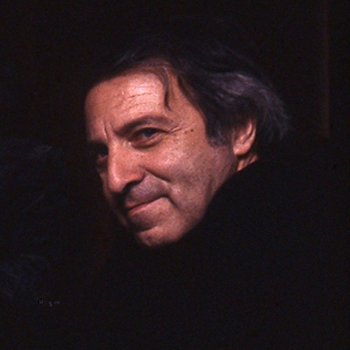
Roberto De Simone (born Naples, 25 August 1933 - died Naples, 6 April 2025) was a prominent Italian theater director, composer, and musicologist. He was the grandson of Roberto De Simone, a notable stage and film actor. His musical journey began at the tender age of six when he started studying piano. In 1946, he enrolled at the Conservatory of San Pietro a Majella in Naples. At just fifteen, he showcased his talent by performing Mozart's Piano Concerto No. 466, for which he also composed the cadenzas. His subsequent performance of Beethoven's Piano Concerto No. 3 in C Minor earned him recognition as one of the top students in Italian conservatories, leading to his participation in the National Award named after Giuseppe Martucci, where he ranked among the top finishers.
De Simone embarked on a concert career in 1957, which he balanced with his passion for exploring the expressive traditions of Campania. He later shifted his focus entirely to music, leaving behind his concert activities and enrolling in the Humanities faculty at the University of Naples Federico II to deepen his understanding of popular traditions in the region. This period saw him create music for various television shows and theatrical productions, including Sophocles' Oedipus the King, The Long Night of Medea, directed by Corrado Alvaro Maurizio Scaparro, and I Raffaele Viviani Achille Millo, as well as the Rai TV drama History of the Camorra, aired in 1978.
In recent years, De Simone began working with the Autunno Musicale Napoletano as a substitute teacher and harpsichordist for the Orchestra Scarlatti.
In 1967, he met a group of young musicians, including Giovanni Mauriello, Eugenio Bennato, and Carlo d'Angiò, who were interested in a new approach to popular music. Together, they established the Nuova Compagnia di Canto Popolare, where De Simone became a facilitator, researcher, and creator of musical materials. His experience with the group from 1967 to 1974 was significant; it not only encapsulated key elements of his theatrical style but also offered a fresh perspective on popular music. His primary objective was to recover and reinterpret the cultural, theatrical, and musical traditions of Campania’s popular music, utilizing both oral and written sources. De Simone and his group conducted field research during local festivals, interviewing villagers to uncover lost traditions. They also paid close attention to classical documents, including library materials, articles, and essays pertaining to past forms such as Villanelle, Laudi, and Strambotti, which were essential for reviving traditional music.
Following a period of concentrated musical activity, the group evolved in its theatrical presentations. In 1974, they performed a reinterpretation of Andrea Perrucci's Cantata dei Pastori at the Teatro San Ferdinando di Napoli, and in 1976, they debuted La Gatta Cenerentola, a work composed by De Simone that garnered success but also led to tensions with some group members.
After his time with the Nuova Compagnia di Canto Popolare, De Simone continued his innovative work in collaboration with the artists of Media Aetas, including Virgilio Villani, a lead performer in La Gatta Cenerentola and Masaniello. With Media Aetas, his research shifted focus from the folklore of oral culture to a historical context. His notable works include La Gatta Cenerentola (1976, 1985, 1989, 1998), directed by Dominico Virgili, and L'Opera Buffa of Del Giovedì Santo (1980, revived in 1999). Other significant productions include Masaniello (1975), Mistero Napolitano (1977), La Festa di Piedigrotta (1978), Li Zite 'ngalera (1978), Eden Theatre of Raffaele Viviani (1981), La Lucilla Costante di Silvio Fiorillo (1982), Il Bazzariota, or the lady of the good humor of Dominico Macchia (1983), Le Religiose alla moda di Gioacchino Dandolo (1984), Cantata per Masaniello (1988), Le Tarantelle del Rimorso (1992), The 99 disgrazie di Pulcinella (1994), Le Cantatrici Villane di Valentino Fioravanti (1998), and L'impresario in Angustie (2001).
As a composer, De Simone's works include the Requiem in memory of Pier Paolo Pasolini (1985), the oratorio Lauda Intorno allo Stabat (1985), I Carmina Vivianea (1987), the theatrical festival composed for the 250th anniversary of the San Carlo theater in Naples (1987), the melodrama Mistero e processo di Giovanna d'Arco (1989), the dramatic cantata Populorum Progressio (1994), choral pieces for Eschilo's Agamennone (1995), the Canto de li Cunti (1990), Eleonora, an opera composed for the bicentennial of the Neapolitan revolution (1999), and the opera Il Re Bello (2004). He also contributed to Eugenio Bennato's album Non farti cadere le braccia.
De Simone directed and edited numerous operas for major theaters worldwide. His repertoire includes productions of Mozart's works (Don Giovanni, Così fan tutte, Idomeneo, and The Magic Flute, which opened the season at La Scala in 1990 and 1995), Giuseppe Verdi's operas (Macbeth, Falstaff, and Nabucco, which opened the season at La Scala in 1986), and pieces by Gioacchino Rossini (including Cinderella and The Italian Girl in Algiers) as well as Pergolesi's La serva mistress. In recent years, he was involved in the productions Cholera (2003) and The King Bello (at the Politeama Theatre in Prato and Florence's Teatro della Pergola in 2004). He also created There we give you the hand (2007), a two-stage adaptation of Mozart's work.