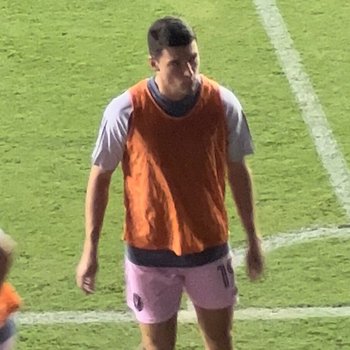
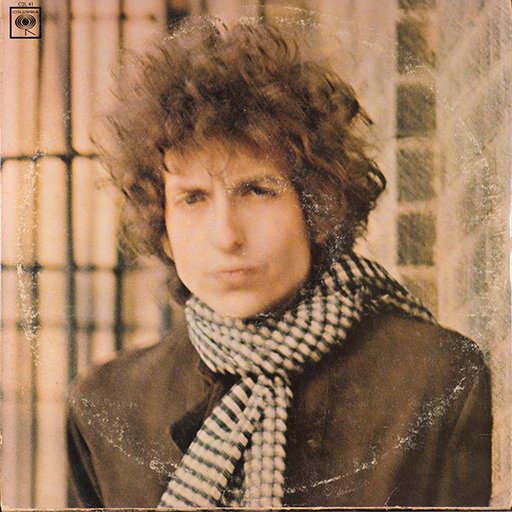
January 27, 1938 - July 26, 2000
Robbie Robison was born and raised in Kennet, Missouri, and he joined the U.S. Air Force in the late 1950s. His service included a deployment to Vietnam as a second-class airman, where a motorcycle accident resulted in an incurable leg infection and a slight limp. Additionally, he dealt with a blood sugar imbalance that contributed to unpredictable mood swings.
A quintessential bohemian figure, Robbie eventually moved to San Diego, where he began to cultivate his alternative persona as the Rockin' Werewolf. This character was a playful fusion of rock 'n' roll and themes drawn from classic monster movies of the 1930s and 1940s. During this period, the folk music revival was thriving, and in 1961, he lived in an apartment above Circe's Cup coffee house, where his Robbie the Werewolf act gained significant popularity.
Robbie authored, illustrated, and published a songbook of parodies of folk songs, which he sold at his performances. Following a brief marriage that ended after a year, he relocated to the San Francisco Bay Area, immersing himself in the folk scene around Marin and Sausalito. There, he met Barbara Moyer, who became his second wife. The duo began performing together in coffee houses, eventually returning to Los Angeles and settling in Hawthorne, where they continued to perform occasionally. During this time, Robbie also worked at the local Mattel toy factory.
One notable venue where they performed was the Waleback, situated on Lincoln Boulevard near Venice Beach in Santa Monica. In 1964, engineer Reice Hamel, now recognized as a pioneer in live recording techniques, captured Robbie’s solo act for posterity. The audience was captivated by his performance, though some may have felt a sense of fear as he prowled among them, sweat dripping from his beard, and laughing maniacally during his atmospheric "Dracula" number. With his long red hair and beard, Robbie was a striking presence on stage, embodying his songs with an energetic and theatrical flair. His repertoire included original compositions and reimagined folk standards, played on his battered twelve-string guitar. For instance, "Tiptoe Through The Tulips" transformed into "Tiptoe Through The Wolf-bane," and "Greenback Dollar" became "Vampire Man." He humorously altered "Tom Dooley" by replacing key lyrics with the word 'censored,' infusing his performances with a risqué humor, especially evident in his between-song banter.
In October 1966, at a Peanut Butter Conspiracy concert, Robbie and his friend Michael Ney crossed paths with guitarist Bob Seal and drummer Dallas Taylor, leading to the formation of a new group. Despite the unconventional setup—both Robbie and Bob played guitar, while Michael and Dallas were both drummers—they decided to proceed, adding vocalist Wanda Watkins to form The Garnerfield Sanitarium. The group soon evolved into the Brain Train, releasing a single on Titan before signing with Elektra Records in early 1967 and rebranding as Clear Light. They began work on their next single, "Black Roses," with the B-side, "She's Ready To Be Free," being Robbie's reflection on his breakup with Barbara, who was now involved with Peanut Butter Conspiracy drummer Jim Voight. The song featured in the film "The President's Analyst" during a scene where Clear Light performed in a club; although Robbie sang on the record, Barry McGuire was brought in to front the group for the film.
Robbie's time in the spotlight was brief. By the time their LP was released in 1967, he had been replaced by keyboardist Ralph Schuckett, though he remained visible on the cover photos taken earlier that year outside the Clear Light house on Franklin Avenue, along with an enigmatic credit as the band's guru.
Following this period, Robbie returned to Sausalito, integrating himself into a community of bohemian houseboat residents. He appeared in the 1974 film "The Last Free Ride," which chronicled the community's struggle against property developers. Later, he worked as a security guard at the shipyards and with the Sausalito sheriff's department. In 1975, he married for the third and final time, eventually settling in Eagle Point, Oregon.