Bad Religion - Biography & Vinyl Records | SRO Records SRO Records
Austin, Texas US    New & Used Vinyl    30-Day Return Guarantee
Contact Us    Fast, Secure International Shipping

Artist

Sunday, April 12, 2026

Explore More Artists

A B C D E F G H I J K L M N O P Q R S T U V W X Y Z #
Bad Religion

Bad Religion

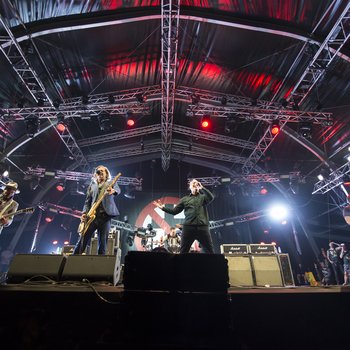
Bad Religion is a punk rock band that originated in 1980 in the San Fernando Valley, Los Angeles, California. The founding members include Greg Graffin (vocals), Brett Gurewitz (guitar), Jay Ziskrout (drums), and Jay Bentley (bass), all of whom were teenagers when the group was formed. Graffin is the only member who has remained with the band throughout its entire career, although Bentley and Gurewitz have also been integral members at various points. The duo of Graffin and Gurewitz serves as the primary songwriters, with occasional contributions from other band members. Bad Religion is recognized for its fast-paced songs, melodic elements, and robust backing harmonies.

The band's debut release was a self-titled EP in 1981, which came out on Epitaph Records—a label Gurewitz founded after borrowing money from his father. In 1982, they followed up with their first full-length album, "How Could Hell Be Any Worse?". During the recording of this album, Ziskrout left the band, and drummer Pete Finestone was brought in to complete the project. In 1983, the band took a surprising turn by releasing "Into The Unknown," an album that showcased a keyboard-driven, progressive rock sound. Neither Bentley, who departed during the recording, nor Finestone appeared on this album, which was met with severe backlash from fans and ultimately led Epitaph to withdraw it from distribution. Gurewitz attributed the misstep to his escalating drug issues, while Graffin, who remained sober, later disavowed the album. Facing financial difficulties and a damaged reputation, Gurewitz left, and the band disbanded. Graffin moved out of state for college but returned to California in 1984, where he was persuaded by Greg Hetson of the Circle Jerks to reform Bad Religion. They brought in Finestone and bassist Tim Gallegos, releasing a 12" EP titled "Back To The Known," produced by Gurewitz, who did not perform on the record.

For the next few years, Graffin and Hetson played sporadically with various lineups. Eventually, Finestone and Bentley rejoined the band full-time. In 1987, a sober Brett Gurewitz returned, solidifying the lineup as a five-piece. The following year, Bad Religion released "Suffer," which received positive acclaim from fans and critics alike. This lineup went on to produce two more albums before Finestone left in 1991, subsequently replaced by Bobby Schayer. In 1993, after the release of their seventh LP, "Recipe For Hate," the band transitioned from Epitaph to Atlantic Records. Following the successful "Stranger Than Fiction" in 1994, Gurewitz departed from the group. Officially, he cited a desire to focus on Epitaph due to the commercial success of The Offspring's "Smash" and expressed dissatisfaction with the Atlantic deal. However, it later emerged that tensions with Bentley were a significant factor in his decision to leave; in 1996, Gurewitz released a single with his new band, the Daredevils, which featured the A-side "Hate You," written about Bentley. Additionally, Gurewitz and Graffin engaged in public disputes after his departure. Brian Baker, formerly of Minor Threat and Dag Nasty, replaced Gurewitz. The band continued to record three more albums for Atlantic, with Graffin remaining the primary songwriter, although "No Substance" in 1998 included notable contributions from other members. These releases, however, received mixed reviews both critically and commercially. Simultaneously, Gurewitz struggled with substance abuse and personal issues. In 2000, a sober Gurewitz made a guest appearance on the band's album, "The New America," sparking speculation about a reunion. This album marked their final release under Atlantic.

After "The New America," drummer Bobby Schayer left the band due to a shoulder injury, and Brooks Wackerman, formerly of Suicidal Tendencies, took over. In 2001, it was announced that Gurewitz had rejoined the band and they would return to Epitaph Records. However, Gurewitz's role primarily involved songwriting and production, as his commitments to Epitaph limited his availability for extensive touring, although he did perform at select shows in Los Angeles. Since their reunion, Gurewitz has rarely played guitar on the albums, with most guitar parts recorded by Brian Baker, though Gurewitz contributes when he chooses. The band has maintained a consistent schedule of recording and touring since their return to Epitaph. In 2013, Greg Hetson stepped back from touring due to personal reasons, and Mike Dimkich was brought in to fill the position. By early 2014, it was confirmed that Hetson had permanently left the group, with Dimkich becoming a full-time member. In the fall of 2015, Wackerman departed for Avenged Sevenfold, and Jamie Miller took over as the drummer.
Browse by Era

Latest Vinyl News

Thundercat – Distracted

Thundercat Distracted The latest from the Californian bass wizard has features from luminaries like Tame Impala, Lil Yachty, A$AP Rocky and the late Mac Miller, but it's unmistakably a Thundercat...

The QuietusReviews
Read Full Article

Albums by Bad Religion

No products currently available for this artist. Check back soon!

On This Day in Music History

Prince Releases His Landmark Album 'Controversy' (1981)

On April 12, 1981, Prince unleashed his game-changing album 'Controversy', which was both a critical and commercial success. The album, released on the cusp of what would become his iconic 'Purple Rain' era, showcased Prince's genre-blending prowess, delving into funk, rock, and pop, all while addressing provocative themes around politics, religion, and sexuality. The title track, 'Controversy', quickly climbed the charts, reaching No. 3 on the Billboard R&B chart and solidifying Prince’s status as a daring artist unafraid to push societal boundaries.

'Controversy' was Prince's fourth studio album and featured standout tracks like 'Sexuality' and 'Do Me, Baby', both of which became staples in his live performances. The original pressing of the album on vinyl remains highly sought after by collectors, with limited edition releases often fetching impressive prices at record stores and online auctions. This album not only showcased Prince's musical innovation but also his ability to blend and transcend genres, paving the way for future artists.

The album's cover art, featuring Prince in a provocative pose, mirrored the themes present in the music, encapsulating the very essence of the provocative persona he became famous for. As 'Controversy' boldly mixed funk rhythms with rock guitar riffs, it laid the groundwork for the eventual pop dominance of the artist, who would go on to inspire countless musicians across multiple genres.

Prince's legacy has endured well beyond his years, with 'Controversy' viewed as a crucial stepping stone in the evolution of American music. Even decades later, the album continues to resonate, reminding listeners of the power of music to challenge norms and inspire change. Today, music lovers scramble to find original vinyl copies as a way to connect with this essential work in Prince's discography, a testament to his lasting impact on the music world.

Funk/rock Prince

Album of the Week

Rock

Blonde on Blonde (1966)

Bob Dylan
Blonde on Blonde by Bob Dylan

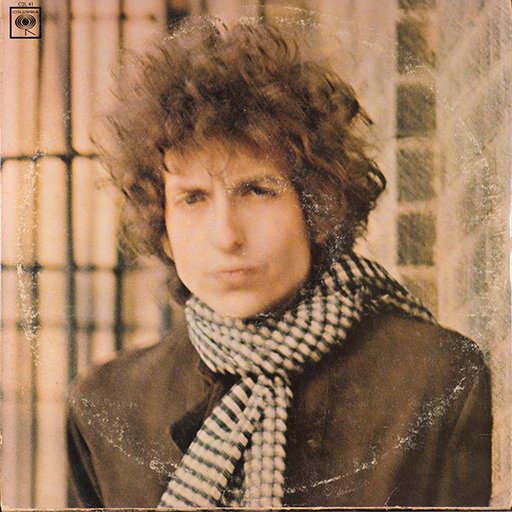
Released in May 1966, Bob Dylan's 'Blonde on Blonde' emerged as a groundbreaking double album that melded rock, folk, and blues into a cohesive masterpiece. Recorded in Nashville, it was one of the earliest double albums in rock music history, showcasing its ambition and influence. The album was met with critical acclaim upon release, with many hailing it as one of the greatest albums of all time. Its innovative use of studio techniques and lyrical depth marked a significant evolution in Dylan's artistry. Musically, 'Blonde on Blonde' is notable for its fusion of genres, featuring electric guitars, organ, and a full band, which was a departure from Dylan's earlier folk-centric sound. Standout tracks such as 'Rainy Day Women #12 & 35,' with its catchy refrain and brass instrumentation, and the haunting 'Just Like a Woman,' exemplify Dylan's lyrical prowess and musical experimentation. Additionally, 'Visions of Johanna,' often regarded as a pinnacle of songwriting, showcases surreal imagery and complex emotions. When collecting 'Blonde on Blonde' vinyl, enthusiasts should pay attention to pressing variations, particularly the original Columbia Records mono pressing (CL 36067) and the later stereo versions (CS 9601). The original mono pressing is highly sought after, with matrix numbers such as XSM 1001-1A and XSM 1002-1A indicating early pressings. Collectors also appreciate the appeal of label variations, including the 1970s reissues on the orange label. Current market value ranges from $20 for less-than-ideal condition copies to upwards of $300 for pristine originals in mono. Condition is crucial, as many pressings suffer from surface noise or wear, making well-maintained copies particularly desirable. Collectors seek 'Blonde on Blonde' not only for its musical significance but also for its cultural impact and the evolution of Bob Dylan as an artist. This album remains a definitive statement in rock history, making it a must-have for any serious vinyl collector.

Standout Tracks:
  • Rainy Day Women #12 & 35
  • Just Like a Woman
  • Visions of Johanna
Pressing Notes: Look for original mono pressings (CL 36067) and stereo versions (CS 9601) with early matrix numbers like XSM 1001-1A.
Value: $20-$300 Collectibility: High

Vinyl Collector Tip #102

Cleaning

Mastering Vinyl Care: Effective Cleaning Techniques

Cleaning your vinyl records is crucial for maintaining their sound quality and ensuring their longevity. Dust, fingerprints, and grime can all affect playback, leading to pops, clicks, and distortion. You should invest in a quality carbon fiber brush for regular cleaning; this helps remove debris without scratching the surface. For deeper cleaning, consider a gentle, alcohol-free cleaning solution specifically designed for vinyl care. Apply a few drops to a microfiber cloth and wipe the record in a circular motion, matching the grooves. This method not only protects your investment—potentially preserving the $100+ value of rare records—but also enhances the listening experience by revealing the full depth of the audio. After cleaning, store your records vertically in a climate-controlled environment to prevent warping and further contamination. Remember, proper preservation techniques can significantly increase the lifespan of your collection. Pro tip: Always clean your stylus with a specialized brush after each session; this reduces the transfer of dirt back onto your records, ensuring your vinyl stays pristine for years to come.

Pro Tip: Use an anti-static brush before and after each play to reduce buildup.

Vinyl Market Pulse

↑ Up

Blues Vinyl: Market Trends for 2026

The vinyl market for Blues records is experiencing a notable resurgence in 2026, with collectors eager to snap up both classic and contemporary titles. Original pressings of legendary artists like B.B. King and Muddy Waters are now commanding prices upwards of $200, a significant increase from approximately $50 last year. This surge can be attributed to a combination of nostalgia, the recent passing of influential Blues artists, and a slew of documentaries that highlight the genre's rich history. As younger generations discover the deep roots of Blues through streaming and film, the demand for vinyl has intensified.

Collectors are advised to focus on rare pressings, particularly those with unique album art or limited releases. Look out for reissues from respected labels, as they often appreciate in value over time. Selling duplicates or lower-demand titles can free up funds for more sought-after records.

Looking ahead, the outlook for Blues vinyl remains optimistic. As appreciation for the genre grows, we anticipate prices will continue to rise, making it a solid investment for collectors. The ongoing interest in vinyl records as a physical format also supports this trend, ensuring that Blues remains a vibrant part of the collecting landscape.

Hot Artists: B.B. King, Muddy Waters, Etta James

Genre Spotlight

Reggae

The Essential Guide to Reggae Vinyl Collecting

Reggae vinyl collecting is a vibrant and rewarding pursuit that taps into the rich history of Jamaican music, offering collectors a chance to own a piece of cultural history. Originating in the late 1960s, reggae emerged from ska and rocksteady, with roots deeply embedded in Rastafarian culture and social commentary. The golden era of reggae, spanning the 1970s to early 1980s, saw the genre blossom, thanks to influential movements like roots reggae, which emphasized spiritual and social themes, and dancehall, which brought a more upbeat and accessible sound.

Essential to any reggae vinyl collection are the artists who shaped the genre. Bob Marley is arguably the most famous reggae musician, known for albums like "Catch a Fire" (1973), which introduced reggae to a global audience. Peter Tosh, a founding member of The Wailers, infused reggae with political activism, notably in his album "Legalize It" (1976). Burning Spear, with his deep roots reggae sound, crafted timeless classics like "Marcus Garvey" (1975), while Toots and the Maytals brought ska to mainstream consciousness with their energetic performances and songs like "Pressure Drop" (1970). Other key figures include Jimmy Cliff, known for his iconic film and soundtrack "The Harder They Come" (1972), and Lee Scratch Perry, revered as a pioneer of dub music, whose innovative production techniques are celebrated on albums like "Super Ape" (1976).

For collectors, certain albums stand out as must-haves. Bob Marley's "Exodus" (1977) is often cited as one of the greatest albums of all time, blending reggae with rock elements. Peter Tosh's "Equal Rights" (1977) is a powerful statement on human rights and justice, while Burning Spear's "Columbus" (1987) showcases his deep spiritual and historical themes. Toots and the Maytals' "Funky Kingston" (1973) is an essential crossover album that captures the genre's upbeat spirit. Lastly, consider adding Lee Scratch Perry's "The Upsetter" (1970) to grasp the essence of reggae's experimental side.

When diving into reggae vinyl collecting, it's crucial to know what to look for. Pay attention to pressing information, as first presses often hold more value. Labels like Studio One, Trojan, and Island Records are significant, with rare variants such as colored vinyl or limited editions being highly sought after.

The current market for reggae records is flourishing, with collectibility at a high level. Prices can range from $20 for more common titles to $500 or more for rare albums, especially those in mint condition or with unique variants. Collectors often seek out original

Featured Rarity

Why This Album Is Worth Thousands

Please Please Me by The Beatles (1963)

"Please Please Me" is not just a debut album—it's a cultural phenomenon that launched The Beatles into stardom. Original UK pressings on the Parlophone label, particularly the first pressing with the misprinted label ('Love Me Do' spelled incorrectly), are highly sought after by collectors. These rare records can fetch anywhere from $150 to an astonishing $25,000 depending on their condition and specific variants.

The first pressing features the iconic black and yellow label, and you’ll want to check for matrix numbers XEX 421-1N and XEX 422-1N, as these indicate an early pressing. Collectors also look for the 'stereo' label, identified by the 'Sold in the UK' text on the label rim, which adds another layer of desirability.

One intriguing tidbit is that this album was recorded in just a single day, showcasing the raw energy that characterized The Beatles’ early sound. The cover photo taken at the EMI studios encapsulates the youthful exuberance of the band, making the original sleeve a true piece of history.

What truly makes these original pressings special is their connection to a moment when music changed forever. The rush of nostalgia, combined with the pristine sound quality of vinyl, brings collectors back to a time when rock was just beginning to take flight. As you dive into vinyl collecting, don’t miss the chance to own a piece of this history—finding a first pressing of "Please Please Me" is like discovering a hidden treasure!

Current Market Value: $150-$25,000