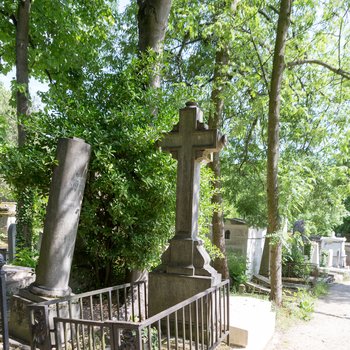
Camille Pleyel (December 18, 1788, Strasbourg – May 4, 1855, Paris) was a notable French virtuoso pianist, publisher, and piano maker. He was the owner of the company Pleyel et Cie, which his father, Ignaz Pleyel (1757–1831), established in 1807, and he also founded the Salle Pleyel concert hall in Paris.
Pleyel honed his musical skills under the guidance of composer and pianist Jan Ladislav Dusík. In 1815, he became a partner in the family business. Together, Camille and Ignaz introduced a successful pianino model, a vertically-strung "cottage" upright piano inspired by British maker Robert Wornum (1780–1852). After his father's retirement in 1824, Camille took over the business and, like many European piano makers of his time, sought the endorsement of prominent pianists, similar to the approach taken by Bösendorfer with Franz Liszt. Pleyel collaborated with Friedrich Kalkbrenner and ultimately gained recognition from Frédéric Chopin, who favored Pleyel pianos over all others. Other distinguished composers and pianists who preferred Pleyel instruments included Claude Debussy, Camille Saint-Saëns, Manuel de Falla, and Alfred Cortot. By 1834, Pleyel et Cie employed 250 workers and was producing over 1,000 instruments each year. During the 1830s, the firm also established two concert venues: a salon on rue Cadet and a 550-seat concert hall adjacent to their factory on rue Rochechouart.
Camille was married to the accomplished pianist Marie Félicité Denise Pleyel, née Moke (1811–1875). Their marriage was fraught with difficulties, particularly due to Hector Berlioz, who had been engaged to Marie and was so deeply infatuated that he allegedly conspired with her mother against the newlyweds. Camille and Marie divorced after four years citing her "multiple infidelities," after which he married Emma Osborn (1817–1906).
In 1850, Camille brought on Auguste Wolff (1821–1887) as an assistant, promoting him to partner within two years. Following Camille's death in 1855, Wolff inherited the company. Under his leadership, Pleyel et Cie further enhanced its reputation and international standing through innovative construction techniques, such as optimal hammer placement and the "overstringing" of grand pianos, which were developed in the 1860s. Wolff also patented several inventions, including a transposing keyboard and a pedal piano. After Wolff passed away in 1887, his son-in-law, Gustave Lyon (1857–1936), took over the business. The company continued to produce a diverse array of grand and upright pianos, along with experimental models. In 1890, they unveiled the Duo-Clave, a double piano created by Emanuel Moór. Additionally, Pleyel introduced one of the first chromatic, or "cross-strung," harps. Among the company’s unique offerings was a "Jungle Piano," constructed in 1913 for Albert Schweitzer to use in his hospital in Lambaréné, made from tropical wood to withstand the harsh climate. They also developed a double-manual piano with enlarged keys for pianist Pierre Hans (1886–1960), whose unusually thick fingers made playing conventional keyboards challenging. This modification, known as the "Hans piano," gained popularity and continued to be produced until the end of World War II, with several composers commissioning original works for this instrument, including August De Boeck, as featured on a 2011 CD album released by Phaedra.
In late 1924, Pleyel financed the construction of a 3,000-seat concert hall on rue du Faubourg-Saint-Honoré, near Place de l'Étoile in Paris. Gustave Lyon, recognized as an expert acoustician, oversaw the design. The Salle Pleyel was inaugurated in October 1927 with a concert conducted by Igor Stravinsky, featuring works by Maurice Ravel and Philippe Gaubert. Unfortunately, the onset of the Great Depression severely impacted Pleyel et Cie, leading the company to file for bankruptcy in 1933. The Crédit Lyonnais bank subsequently took control of the concert hall and expanded into piano manufacturing.