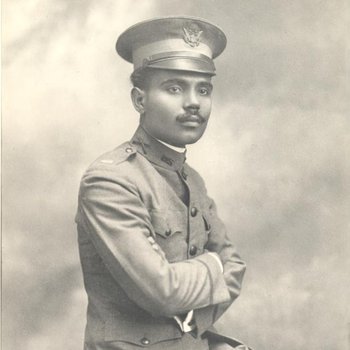
Pedro Albizu Campos (born in Ponce on September 12, 1891 – died in San Juan on April 21, 1965) was a prominent Puerto Rican politician and independence leader, recognized as the most significant figure in the 20th-century struggle for Puerto Rican independence. He was often referred to as “El maestro,” “Don Pedro,” and “El último libertador de América.”
Albizu Campos pursued his studies in chemical engineering at the University of Vermont in Boston, subsequently studying law at Harvard University. During his time in Boston, he expressed solidarity with the national liberation movements in Ireland and India, forging friendships with prominent figures such as Subhas Chandra Bose, who would later collaborate with Mahatma Gandhi, and Éamon de Valera, an Irish politician who would eventually become president of Ireland post-independence. His service in the United States Army spanned four years during World War I (1914-1918).
In 1921, Albizu Campos completed his university education and returned to Puerto Rico to practice law, choosing not to work for the existing corporations in the country. He felt a strong obligation to guide Puerto Ricans toward the necessity of ending their colonial status.
He joined the Puerto Rican Nationalist Party (PNPR), which was dedicated to the island's full independence. On behalf of the party, he traveled across various Latin American countries to gather support for Puerto Rico's independence and collaborated with the Anti-Imperialist League of the Americas (LADLA). On May 11, 1930, he was elected president of the PNPR.
In 1932, he ran for legislative elections, garnering over 5,000 votes but receiving little support. Subsequently, he decided not to participate in future elections called by the U.S. administration and refused to comply with the military draft. Transitioning to armed resistance, Albizu Campos was convicted in 1936 for plotting to overthrow the U.S. government in Puerto Rico and for various acts of violence against the government. That same year, he and other leading nationalists, including poets Juan Antonio Corretjer and Clemente Soto Vélez, were arrested and sent to a prison in Atlanta.
After serving 11 years in U.S. prisons, Albizu returned to Puerto Rico in 1947, as preparations for armed resistance began against plans for a permanent solution to the island's status with the establishment of the Commonwealth of Puerto Rico.
The Grito de Jayuya occurred on October 30, 1950, which included an assassination attempt on President Harry S. Truman, for which Albizu was held responsible. He and other leaders were imprisoned again, this time in Puerto Rico. In 1953, Puerto Rico's governor, Luis Muñoz Marín, granted him a pardon. However, following an attack on the U.S. House of Representatives in 1954, the pardon was revoked.
Albizu Campos's health deteriorated during his imprisonment. Speculation arose regarding his mental health, and in 1956, he suffered a stroke while in prison and was transferred to the Presbyterian Hospital of San Juan, where he was kept under heavy police surveillance. He claimed to have been subjected to radiation experiments during his incarceration. Despite suggestions from some officials that he was mentally ill, numerous medical examinations indicated symptoms consistent with radiation exposure. Dr. Orlando Damuy, the president of the Cancer Association of Cuba, visited Puerto Rico to examine Albizu, stating that the burns on his body were due to intense radiation exposure. Notably, Albizu Campos received no medical attention for five days.
On November 15, 1964, he was pardoned again by Muñoz Marín, a decision that faced significant criticism from anti-independence factions. Pedro Albizu Campos passed away on April 21, 1965, and was interred at the Santa María Magdalena de Pazzis Cemetery. His funeral drew one of the largest crowds in Puerto Rico's history, with an estimated 75,000 attendees.
In 1994, under President Bill Clinton’s administration, the Department of Energy disclosed that it had conducted radiation experiments on human subjects without their consent between the 1950s and 1970s, with claims that Pedro Albizu Campos was among the victims of these experiments.