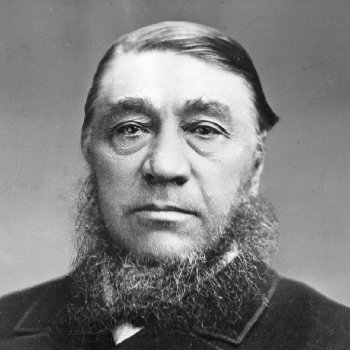
Paulus, born Jean-Paulin Habans on 6 February 1845 in Saint-Esprit, was a notable French chanson singer, stage actor, comedian, publisher, and theatrical entrepreneur who made a significant mark on the Parisian entertainment scene during the "Belle Époque," a period that spanned from the end of the Franco-Prussian War in 1871 to his retirement in 1903. He emerged as one of the most popular and financially successful French café chantant singers of his time, alongside contemporaries such as Thérésa (1836–1913) and Éloi Ouvrard (1855–1938). Paulus's extensive collaboration with songwriting duo Lucien Delormel (1847–1899) and Léon Garnier (1856–1905) resulted in a remarkable repertoire of around 2,500 songs.
From 1892 to 1897, Paulus owned and managed the Bataclan theater, a prestigious venue in Paris that he revitalized after acquiring it during a period of bankruptcy. Under Garnier's artistic direction, the theater hosted prominent performers, including Fragson and Aristide Bruant.
According to contemporary accounts, including his authorized memoirs titled Trente ans de Café-concert ("Thirty Years of Café-concert"), compiled by Octave Pradels and published shortly before his death in 1908, Paulus was born as "Jean-Paul" Habans. He came from a modest family of shopkeepers and was the second youngest of six children, with only three surviving to adulthood. Raised by an unemployed single mother, Jeanne Marie Habans (née Anne Marie Franchu, 1815–1877), in the Saint-Esprit district of Bayonne, he received limited formal education and was largely self-taught. His career began as a goguettier, participating in local singing societies reminiscent of today's open-mic events, before he made his Paris debut at the age of 19 in 1864, regularly performing at small cafés and gradually building his reputation within the burgeoning caf' conc' scene.
A breakthrough came in 1871 when Paulus introduced his unique performance style characterized by hyperactive movements, energetic dancing, and exaggerated expressions, earning him the moniker chanteur agité ("agitated singer"). His innovative, slapstick approach quickly gained popularity, with theater critic Francisque Sarcey coining the term gambillard to describe his disjointed, frenetic stage presence. By the late 1880s, Paulus had attained significant critical and commercial success. He headlined at Concert Parisien from 1883 to 1885, though he left prematurely and lost a legal battle against the venue, resulting in an obligation to pay 30,000 francs in restitution (equivalent to nearly €980,000 in 2025 currency). Between 1885 and 1889, he performed at prestigious establishments like Alcazar d'Été and La Scala.
On 14 July 1886, during Bastille Day celebrations, he stirred controversy by ad-libbing a verse in his hit song En revenant de la Revue, which paid tribute to revanchist politician and General Georges Ernest Boulanger (1837–1891). This political expression polarized audiences—receiving acclaim from Boulangist supporters while facing backlash from critics and opposing factions. Reacting to the negative press, Paulus launched a brief magazine, La Revue des Concerts, in March 1887 with Delormel and Garnier to mock his detractors. By 1888, theater historians estimated that Paulus earned up to 400 francs per performance (approximately €6,000–13,000 in 2025 currency), a substantial fee representing 25-30% of the average annual salary for clerical workers in France.
In the late 1880s, Adelbert Theodor Wangemann (1855–1906), a close associate of Thomas Edison, chose Paulus as a key representative of the French music scene for the phonograph exhibition at the World's Fair in Paris, although most recordings from this period remain unreleased. Some of his performances were preserved on E. Berliner's Gramophone discs.
In 1897, Paulus commissioned pioneering cinematographer Georges Méliès (1861–1938) to film his performance, resulting in the silent short Paulus Chantant ("Paulus Singing"), which was screened at the Bataclan theater. In an innovative approach, Paulus sang along with the film while appearing on stage only for the final verses. This project is notable for its use of artificial lighting, as most films of the time were shot in natural light; Paulus's refusal to work outdoors led Méliès to create a makeshift studio equipped with over 30 mercury lamps near the Paris Opera.
Paulus retired in 1903 at the relatively young age of 58. Despite his illustrious career, he faced financial difficulties in his later years due to extravagant spending, unsuccessful business ventures such as his "Clos Paulus" vineyard, and a divorce from Rose Marie Gabrielle (1858–1932) in December 1901 after 18 years of marriage, which involved alimony for their three underage children. Nevertheless, his artistic legacy endured; in December 1906, a 60th anniversary gala was organized by his longtime friend Fursy (1866–1929) at the Théâtre de la Gaîté, sponsored by Le Figaro, featuring celebrated performers including Polaire, Alice Bonheur, and Marcelle Yrven.