
Minoru Nojima - Biography & Vinyl Records | SRO Records SRO Records
Austin, Texas US    New & Used Vinyl    30-Day Return Guarantee
Contact Us    Fast, Secure International Shipping

Artist

Saturday, April 4, 2026

Explore More Artists

A B C D E F G H I J K L M N O P Q R S T U V W X Y Z #
Minoru Nojima

Minoru Nojima

Minoru Nojima (born May 23, 1945, in Yokosuka, Kanagawa – died May 9, 2022) was a distinguished Japanese classical pianist. He held prominent roles in academia as the president of the [Tokyo College of Music](https://discogs.com/label/1577245) and as a Piano Professor at Toho Gakuen School Of Music. Additionally, Nojima served as the Managing Committee Chairperson for Sendai International Music Competition and adjudicated several prestigious international competitions, including the Van Cliburn International Piano Competition and Queen Elisabeth Competition.

Nojima's musical journey began at the tender age of three, when he started piano lessons with Aiko Iguchi. While still a student at Toho Gakuen School Of Music, he made his debut public performance at the age of ten, sharing the stage with NHK Symphony Orchestra. This early success was followed by a series of subscription concerts with the Tokyo Philharmonic Orchestra and Japan Philharmonic Orchestra, establishing him as a child prodigy.

From 1966 to 1968, Nojima studied at the Moscow Conservatory under the invitation of the USSR Ministry of Culture. His career gained further momentum in 1969 when he won the second prize at the 3rd Van Cliburn Competition. The following year, he made his American debut at Carnegie Hall, which received critical acclaim. During his time in New York, Nojima continued his piano studies with Constance Keene and Abram Chasins. He also performed with major orchestras across Japan, including the New Japan Philharmonic, The Tokyo Symphony Orchestra, Tokyo Metropolitan Symphony Orchestra, Yomiuri Nippon Symphony Orchestra, and Gunma Symphony Orchestra, collaborating with notable conductors such as Wolfgang Sawallisch, Seiji Ozawa, Valery Gergiev, Paavo Järvi, and Charles Dutoit.

Despite his significant talent, Nojima's recorded output is relatively limited for an artist of his stature. Shortly after his Carnegie Hall debut in 1969, he released "Piano Recital" on Angel Records, which included [i]Variations On A Theme By Paganini[/i] by Johannes Brahms and works by Liszt. In 1984, he recorded Teizo Matsumura's "Piano Concerto No. 1 / Piano Concerto No. 2" for RCA Victor, which was dedicated to him; he premiered [i]Piano Concerto No. 2[/i] in Moscow, Paris, London, and New York. Nojima also produced a premiere recording of Michio Mamiya's [i]Piano Concerto No. 2[/i] and [i]2nd Piano Sonata[/i] for Toshiba/EMI, which was re-released in 1993 by .

His most recognized albums, [i]Nojima Plays Liszt[/i] (1987) and [i]Nojima Plays Ravel[/i] (1990), were released on the US audiophile label Reference Recordings. Notably, one of the pieces from [i]Nojima Plays Liszt[/i] was included in a plagiarized album, Liszt's "Transcendental Etudes" (Concert Artist, CACD 90842), released by Joyce Hatto and her husband, William Barrington-Coupe.

Real Name: 野島 稔

Browse by Era

Latest Vinyl News

Albums by Minoru Nojima

No products currently available for this artist. Check back soon!

On This Day in Music History

The Beatles' Final Public Performance (1969)

On April 4, 1969, The Beatles made history with their final public performance, an iconic rooftop concert atop the Apple Corps building in London. The event was not just a last hurrah for the legendary band; it also marked a pivotal moment in rock history, encapsulating the spirit of an era defined by creativity and expression. Fans in the streets below were treated to a set that included classics like 'Get Back,' 'Don't Let Me Down,' and 'I've Got a Feeling,' all recorded live for the band's upcoming album 'Let It Be.' This impromptu gig featured the unique charm of The Beatles at their peak and resonated with the themes of hope and rebellion.

The performance was filmed and later included in the documentary 'Let It Be,' which showcased the band's struggles during the making of the album. The original vinyl pressing of 'Let It Be' was released on May 8, 1970, and went on to reach No. 1 on the Billboard chart, solidifying its place in music history. The rooftop concert was broadcasted on television, capturing the essence of the band's chemistry and the raw energy that defined their live performances.

In a world hungry for authenticity, The Beatles' rooftop show offered a glimpse into their candid, unfiltered artistry. This performance not only provided a fitting conclusion to their live journey but also influenced countless artists across genres. Today, the images of John Lennon, Paul McCartney, George Harrison, and Ringo Starr singing against the backdrop of the London skyline serve as a lasting reminder of the band's impact and their musical legacy. The rooftop concert remains a celebrated moment in music history, often cited as one of the greatest live performances of all time, and its influence reverberates through the vinyl records of generations to come.
Rock The Beatles

Album of the Week

Rock

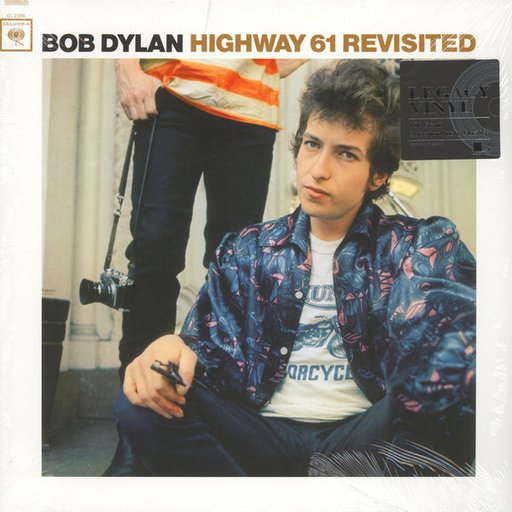
Highway 61 Revisited (1965)

Bob Dylan
Highway 61 Revisited by Bob Dylan

Released in August 1965, Bob Dylan's 'Highway 61 Revisited' marked a pivotal moment not just in Dylan’s career but in the landscape of popular music. Coming on the heels of his groundbreaking album 'Bringing It All Back Home', this record further solidified Dylan’s transition from folk icon to rock superstar. The album was recorded at Columbia Records' studios in New York City, with Dylan collaborating closely with producer Tom Wilson. Upon its release, 'Highway 61 Revisited' received widespread critical acclaim and commercial success, reaching number 3 on the Billboard charts and influencing countless artists across genres. Musically, the album is noted for its innovative blend of rock, blues, and poetic lyrics, showcasing Dylan's unique storytelling ability. Standout tracks like 'Like a Rolling Stone', often hailed as one of the greatest songs of all time, redefine the boundaries of popular music with its electric sound and incisive lyrics. Another highlight, 'Ballad of a Thin Man', features a haunting and enigmatic narrative that captivates listeners. The title track, 'Highway 61 Revisited', serves as a surreal journey down the iconic highway, merging vivid imagery with a catchy melody. For collectors, the pressing variations of this album are significant. Original pressings from 1965 feature a 6-eye label design, with matrix numbers such as XSM 1240 and XSM 1241 for side A and B respectively. Later reissues and mono versions have their own unique identifiers, which can influence value. The current market for 'Highway 61 Revisited' vinyl ranges from $20 for a well-worn reissue to upwards of $300 for a mint original pressing. Condition is crucial; the album is susceptible to surface noise and skipping, so collectors should seek copies with minimal wear. Collectors are drawn to this album not only for its historical significance but also for its artistic innovation and cultural impact. 'Highway 61 Revisited' remains a cornerstone of any serious Bob Dylan record collection, embodying the spirit of 1960s counterculture and the evolution of rock music.

Standout Tracks:
  • Like a Rolling Stone
  • Ballad of a Thin Man
  • Highway 61 Revisited
Pressing Notes: Look for original 1965 pressings with 6-eye labels and matrix numbers XSM 1240/XSM 1241. Mono versions are also collectible.
Value: $20-$300 Collectibility: High

Vinyl Collector Tip #94

Cleaning

Mastering Vinyl Care for Longevity

When it comes to record collecting, vinyl care is paramount to preserving your investment and maintaining sound quality. Dust and grime can accumulate on your records, leading to pops, clicks, and a diminished listening experience. You should start by investing in a quality carbon fiber brush; it effectively removes surface dust without scratching the vinyl. For deeper cleaning, consider using a record cleaning solution and a microfiber cloth. This method can preserve the value of your records, especially those worth $100 or more, ensuring they remain in pristine condition.

To clean your records, begin by gently brushing the surface with the carbon fiber brush, always moving in a circular motion following the grooves. If you encounter stubborn dirt, lightly dampen a microfiber cloth with your cleaning solution and wipe the record in a similar manner. Allow the vinyl to air dry completely before placing it back in its sleeve to avoid moisture damage.

The preservation of your records not only enhances your listening experience but also protects their resale value. Remember, a well-maintained record can easily fetch prices above $100, making your investment worthwhile. Regular cleaning is essential for longevity, ensuring your collection remains a source of joy for years to come.

Pro Tip: For stubborn stains, consider using a dedicated ultrasonic record cleaner for professional-grade results.

Vinyl Market Pulse

↑ Up

Folk Revival Vinyl: Market Trends for 2026

The vinyl market is currently experiencing a significant resurgence in Folk Revival records, with collectors showing heightened interest this year. Original pressings of classic albums by artists like Bob Dylan and Joan Baez have seen price movements that reflect this trend, with some original pressings now valued at $200+, a sharp increase from just $50 last year. The driving forces behind this surge include nostalgia for the 1960s counterculture, recent artist deaths, and the popularity of documentaries highlighting the genre’s impact on music history. Collectors are eager to acquire both vintage pressings and high-quality reissues, making this a ripe opportunity for both buying and selling. Notably, albums by artists like Peter, Paul and Mary and Simon & Garfunkel are flying off the shelves, making them hot picks for investment. If you have any rare pressings of these iconic albums, now is the time to sell, as demand shows no sign of slowing down. Future outlook suggests that prices will continue to rise, fueled by ongoing interest in the Folk Revival genre and its cultural significance. As the vinyl market continues to evolve, keeping an eye on collecting trends will be crucial for savvy investors looking to capitalize on this nostalgic wave.

Hot Artists: Bob Dylan, Joan Baez, Simon & Garfunkel

Genre Spotlight

Electronic

The Essential Guide to Electronic Vinyl Collecting

Electronic music has evolved significantly since its inception in the late 20th century, making electronic vinyl collecting a thrilling pursuit for audiophiles and music enthusiasts alike. The genre originated in the 1950s with experimental sounds, but it exploded into mainstream consciousness during the 1980s, coinciding with the rise of synthesizers and drum machines. The golden era of electronic music spanned the late '70s through the '90s, characterized by the emergence of various sub-genres such as techno, house, ambient, and trance. Key movements like the Chicago House scene and the Detroit Techno revolution laid the foundation for today's electronic music landscape.

When diving into electronic vinyl collecting, there are several essential artists to consider. Kraftwerk, often dubbed the pioneers of electronic music, shaped the genre with their innovative use of technology and sound. Aphex Twin, known for his eclectic style, pushed boundaries and introduced complex rhythms and textures. Daft Punk brought electronic music into the mainstream, blending house with pop sensibilities. Other notable artists include Moby, who infused electronic music with elements of rock and pop, and Boards of Canada, who are celebrated for their ambient soundscapes. Finally, Underworld, best known for their track "Born Slippy," made significant contributions to the electronic scene, especially in the 1990s.

For collectors, there are must-own albums that define electronic music. Kraftwerk's "Trans-Europe Express" (1977) is a seminal work that showcases their pioneering sound. Aphex Twin's "Selected Ambient Works 85-92" (1992) features a range of ambient tracks that are both haunting and beautiful. Daft Punk's "Homework" (1997) revolutionized house music and remains a dancefloor staple. Moby's "Play" (1999) integrated electronic music with blues and gospel influences, becoming a commercial success. Lastly, Boards of Canada's "Music Has the Right to Children" (1998) offers a nostalgic and atmospheric listening experience.

When collecting electronic vinyl, it's essential to pay attention to pressing info, labels, and rare variants. Look for original pressings and limited editions, as these often hold higher value. Labels like Warp, Ninja Tune, and R&S Records are known for their quality releases and often command a premium. Additionally, colored vinyl and picture discs can be more collectible due to their unique aesthetics.

The current market for electronic vinyl is robust, with collectibility rated as high. Prices can range from $20 for more common releases to $500 or more for rare editions or sought-after albums. The demand for electronic records has surged, thanks to the resurgence of vinyl culture, making it an exciting time to start or grow your collection.

Sound characteristics in electronic music vary widely

Featured Rarity

Why This Album Is Worth Thousands

Kind of Blue by Miles Davis (1959)

Miles Davis's "Kind of Blue" is not just an album; it's a cornerstone of jazz history and a coveted gem for vinyl collectors. Released in 1959, this masterpiece redefined the genre and introduced modal jazz to the world. Its collectibility stems from its profound influence, coupled with a limited number of original pressings. The first pressing on Columbia Records, distinguished by the deep groove and the label featuring '6 Eye' design, can fetch anywhere from $1,500 to an astonishing $25,000 depending on its condition.

Collectors often seek variants like the original UK pressing on CBS, which can command prices between $750 and $3,000. Rare pressings also include the 1962 mono version, which is particularly sought after due to its unique sound dynamics. The album’s iconic cover art, featuring a blue hue, only adds to its allure, making the original gatefold sleeve a treasure in itself.

Trivia that delights collectors includes the fact that the album was recorded in just two sessions, with legendary musicians like John Coltrane and Bill Evans contributing to its magic. When hunting for this classic, look for matrix numbers that start with 'P' for original pressings and check the deadwax for inscriptions that may hint at an early pressing.

In the realms of vinyl collecting, few albums carry the weight and history of "Kind of Blue." Its rarity and the story it tells make it a must-have for any serious collector. Add this masterpiece to your collection, and you won’t just own a record; you’ll own a piece of music history.

Current Market Value: $1,500-$25,000