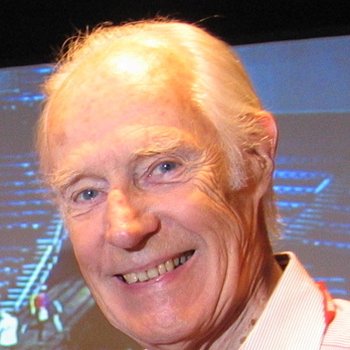
George Martin, an esteemed English record producer, arranger, composer, conductor, audio engineer, and musician, was born on January 3, 1926, in Highbury, London, England, and passed away on March 8, 2016, in Wiltshire, England. It is important to note that there is another American songwriter with the same name, recognized for writing songs recorded by artists such as Earl Klugh, Gene Dunlap, and The Four Tops.
Martin's musical journey began at a young age; he developed a passion for the piano before he turned eight. His interests later expanded to architecture, design, and aeronautics, leading him to serve as a pilot in the Fleet Air Arm, the Royal Navy's aviation branch, towards the end of World War II.
After the war, Martin returned to his musical roots by attending the Guildhall School of Music and Drama, where he studied composition, conducting, orchestration, and music theory, while also taking up the oboe as his second principal instrument. He entered the music industry as an assistant to Oscar Carl Preuss, the head of Parlophone Records, during a time of significant transformation for the label, which was shifting from producing mainly classical recordings to embracing "pop" music. This period also marked the transition in music recording technology from 78s to LPs and 45s, with magnetic tape revolutionizing the recording process. Upon Preuss's retirement in 1955, Martin became the head of Parlophone, making him the youngest label chief in the company's history at just 29 years old.
Martin's first number one hit as a producer in the U.K. was "You're Driving Me Crazy" by The Temperance Seven in 1961. He steered Parlophone into the rock & roll era with hits like "Don't You Rock Me, Daddy-O" by The Vipers Skiffle Group, which reached the Top Ten. In the spring of 1962, he interviewed Brian Epstein, a Liverpool manager, about a band called The Beatles. That summer, The Beatles signed with Parlophone, and over the ensuing years, Martin played a crucial role in their development, earning the nickname "the fifth Beatle" for his contributions. In 1963, records produced by Martin dominated the U.K. charts, collectively spending 37 weeks at the number one position. However, in 1965, he left Parlophone due to stagnant producer royalties amid the label's rapid growth and went on to establish AIR (Associated Independent Recording) with two other producers from EMI, Parlophone's parent company.
Martin produced The Beatles until the release of their final studio album, Abbey Road, in 1969. After the band's breakup, he was finally free from his commitments to EMI. Throughout the 1970s, Martin worked with a diverse array of artists, including America, Jimmy Webb, Jeff Beck, and the Mahavishnu Orchestra, continuing his production work through AIR. In 1969, he left EMI to create an independent recording complex at the fourth floor of 214 Oxford Street in central London, which operated until 1991, before relocating to another studio where he worked from 1992 to 2006. He also opened another studio in 1979, which unfortunately closed after a tropical hurricane in 1989.
On June 15, 1996, Martin was knighted for his extensive production work, particularly his collaborations with The Beatles. He released the album In My Life on October 20, 1998, marking his departure from the music industry. This album featured a collection of Beatles songs he had originally produced, reinterpreted by various well-known artists. In 2005, he briefly returned to the music scene, assisting his son, Giles Martin, in compiling clips and songs for The Beatles’ and Cirque Du Soleil's LOVE project and remix album.
George Martin was inducted into the Rock and Roll Hall of Fame in 1999 as a Non-Performer.