Bradley Lehman - Biography & Vinyl Records | SRO Records SRO Records
Austin, Texas US    New & Used Vinyl    30-Day Return Guarantee
Contact Us    Fast, Secure International Shipping

Artist

Sunday, April 12, 2026

Explore More Artists

A B C D E F G H I J K L M N O P Q R S T U V W X Y Z #
Bradley Lehman

Bradley Lehman

Bradley Lehman (born 1964, Indiana) is an esteemed American musicologist, composer, arranger, organist, and harpsichordist currently residing in Dayton, Virginia. He co-founded the Hodel-Lehman Duo alongside trumpeter and flugelhorn player Martin Hodel and actively performs as a church organist. Lehman is particularly recognized for developing the "Bach/Lehman 1722" temperament, a unique interpretation of J. S. Bach's intricate harpsichord and clavichord tunings. This innovative approach was inspired by his analysis of the ornamental frontispiece atop the title page of the Well-Tempered Clavier. Although not the first to explore this hypothesis, Lehman's tuning system gained significant traction within the music community.

His research was presented in a two-part article published in the Early Music journal in 2005, along with further contributions to Clavichord International, BACH: Journal of the Riemenschneider Institute, and various other academic platforms. To facilitate the dissemination of his findings, he established the private imprint LaripS.com to promote the "Bach/Lehman 1722" temperament. In addition to his musical endeavors, Lehman has worked as a technical writer and was previously an app developer/designer. Since April 2020, he has taken on the role of part-time IT consultant at Eastern Mennonite University.

Lehman began his academic journey at Goshen College (1982–1986), where he double-majored in Music and Mathematics, earning a Bachelor's degree. He continued his studies at The University of Michigan, obtaining two Master's degrees in 1992—one in Early Keyboard Instruments from the University of Michigan School of Music and another in Musicology from the Rackham School of Graduate Studies. In 1994, he completed his Doctor of Musical Arts (A.Mus.D) degree in Harpsichord Performance. His principal research focus on "Bach temperament" addresses a significant question in Western musicology: the lack of explicit instructions from Johann Sebastian Bach regarding the tuning of harpsichords and clavichords for his influential work, the Well-Tempered Clavier (BWV 846–893). Since the release of C.P.E. Bach's 1753 manuscript, Versuch über die wahre Art das Clavier zu spielen ("Essay on the True Way to Play Fortepiano"), many scholars have sought to uncover Bach's intended tuning system, with notable contributions from Bach's pupil J. P. Kirnberger, who proposed three temperaments in his 1771 treatise, Die Kunst des reinen Satzes in der Musik ("The Art of Pure Composition in Music"). In the 20th century, German musicologist and composer Herbert Kelletat (1907–2007) emerged as a leading advocate for "Kirnberger III" as the closest approximation to Bach's intentions.

The analysis of visual elements in Bach's manuscripts gained traction in the 1970s, initiated by Herbert A. Kellner (1936–2003), who posited that the seal from Bach's 1722 work contained a mnemonic rule for tuning within its design, akin to the "Guidonian hand" or the "Circle of Fifths." In 1998, German mathematician Andreas Sparschuh from Technische Universität Darmstadt—studying Baroque organ tunings—identified Bach's decorative outline in the Das Wohltemperirte Clavier's first book. Sparschuh presented a paper at the 1999 German Mathematical Society Annual Conference, asserting that each loop in the ornamentation corresponded to ⅕ in the sequence starting from the note A, and he created a recursive tuning algorithm reminiscent of the Collatz conjecture.

Lehman built upon these same decorative curls found above the title of Das Wohltemperirte Clavier, asserting that Bach intentionally crafted an asymmetrical and irregular pattern. He proposed a method for creating a practical diagram for tuning keyboards by ear based on this spiraling figure. His findings were detailed in a two-part article titled Bach's Extraordinary Temperament: Our Rosetta Stone in the Early Music journal (Vol. 33, Nos. 1&2, February/May 2005, Oxford University Press). Following the article's publication, he launched his LaripS.com website, which made subsequent publications and additional resources readily available. Lehman also recorded several albums, both solo and with the Hodel-Lehman Duo, to illustrate the practical usage of the "Bach/Lehman 1722" temperament.

Many harpsichordists, arrangers, and composers have since adopted Lehman's tuning, including:

- Richard Egarr, who featured it in his 2006 2×CD on Harmonia Mundi - Peter Watchorn, who presented a 2×CD on Musica Omnia - Ronald Brautigam, performing on a Paul McNulty "Walter-style" fortepiano tuned to Bach/Lehman - Luc Beauséjour - Vicky Wright with her son, "boy soprano" Parker Wright - Harpsichordists Menno Van Delft, Pieter-Jan Belder, and Siebe Henstra, who released a 2×CD on Brilliant Classics - The Purcell Quartet - The Bach Sinfonia conducted by Daniel Stipe - Zsolt Kaltenecker, who played the solo "Clavitar" on his 2007 jazz album, a CD on R & V Records - Photographer and sound artist Dave Krooshof, who designed a Raspberry Pi device for his synth rack, processing MIDI data through a custom Pd patch - James Pressler at Frog Music Press, a supplier of songbooks for Rodgers & Roland church organs, produced a MIDI-compatible pipe organ sample package.


Real Name: Bradley P Lehman

Browse by Era

Latest Vinyl News

Albums by Bradley Lehman

No products currently available for this artist. Check back soon!

On This Day in Music History

Prince Releases His Landmark Album 'Controversy' (1981)

On April 12, 1981, Prince unleashed his game-changing album 'Controversy', which was both a critical and commercial success. The album, released on the cusp of what would become his iconic 'Purple Rain' era, showcased Prince's genre-blending prowess, delving into funk, rock, and pop, all while addressing provocative themes around politics, religion, and sexuality. The title track, 'Controversy', quickly climbed the charts, reaching No. 3 on the Billboard R&B chart and solidifying Prince’s status as a daring artist unafraid to push societal boundaries.

'Controversy' was Prince's fourth studio album and featured standout tracks like 'Sexuality' and 'Do Me, Baby', both of which became staples in his live performances. The original pressing of the album on vinyl remains highly sought after by collectors, with limited edition releases often fetching impressive prices at record stores and online auctions. This album not only showcased Prince's musical innovation but also his ability to blend and transcend genres, paving the way for future artists.

The album's cover art, featuring Prince in a provocative pose, mirrored the themes present in the music, encapsulating the very essence of the provocative persona he became famous for. As 'Controversy' boldly mixed funk rhythms with rock guitar riffs, it laid the groundwork for the eventual pop dominance of the artist, who would go on to inspire countless musicians across multiple genres.

Prince's legacy has endured well beyond his years, with 'Controversy' viewed as a crucial stepping stone in the evolution of American music. Even decades later, the album continues to resonate, reminding listeners of the power of music to challenge norms and inspire change. Today, music lovers scramble to find original vinyl copies as a way to connect with this essential work in Prince's discography, a testament to his lasting impact on the music world.

Funk/rock Prince

Album of the Week

Rock

Blonde on Blonde (1966)

Bob Dylan
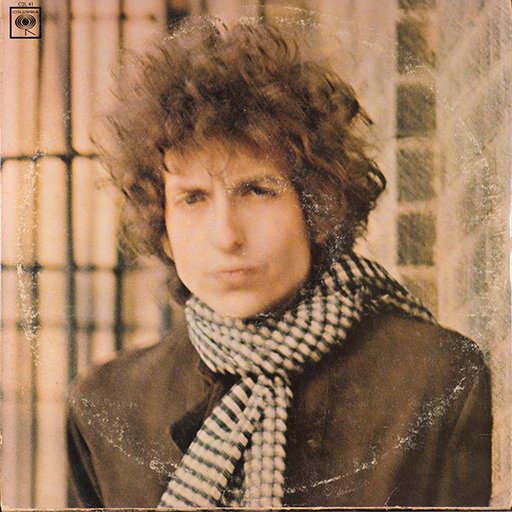
Blonde on Blonde by Bob Dylan

Released in May 1966, Bob Dylan's 'Blonde on Blonde' emerged as a groundbreaking double album that melded rock, folk, and blues into a cohesive masterpiece. Recorded in Nashville, it was one of the earliest double albums in rock music history, showcasing its ambition and influence. The album was met with critical acclaim upon release, with many hailing it as one of the greatest albums of all time. Its innovative use of studio techniques and lyrical depth marked a significant evolution in Dylan's artistry. Musically, 'Blonde on Blonde' is notable for its fusion of genres, featuring electric guitars, organ, and a full band, which was a departure from Dylan's earlier folk-centric sound. Standout tracks such as 'Rainy Day Women #12 & 35,' with its catchy refrain and brass instrumentation, and the haunting 'Just Like a Woman,' exemplify Dylan's lyrical prowess and musical experimentation. Additionally, 'Visions of Johanna,' often regarded as a pinnacle of songwriting, showcases surreal imagery and complex emotions. When collecting 'Blonde on Blonde' vinyl, enthusiasts should pay attention to pressing variations, particularly the original Columbia Records mono pressing (CL 36067) and the later stereo versions (CS 9601). The original mono pressing is highly sought after, with matrix numbers such as XSM 1001-1A and XSM 1002-1A indicating early pressings. Collectors also appreciate the appeal of label variations, including the 1970s reissues on the orange label. Current market value ranges from $20 for less-than-ideal condition copies to upwards of $300 for pristine originals in mono. Condition is crucial, as many pressings suffer from surface noise or wear, making well-maintained copies particularly desirable. Collectors seek 'Blonde on Blonde' not only for its musical significance but also for its cultural impact and the evolution of Bob Dylan as an artist. This album remains a definitive statement in rock history, making it a must-have for any serious vinyl collector.

Standout Tracks:
  • Rainy Day Women #12 & 35
  • Just Like a Woman
  • Visions of Johanna
Pressing Notes: Look for original mono pressings (CL 36067) and stereo versions (CS 9601) with early matrix numbers like XSM 1001-1A.
Value: $20-$300 Collectibility: High

Vinyl Collector Tip #102

Cleaning

Mastering Vinyl Care: Effective Cleaning Techniques

Cleaning your vinyl records is crucial for maintaining their sound quality and ensuring their longevity. Dust, fingerprints, and grime can all affect playback, leading to pops, clicks, and distortion. You should invest in a quality carbon fiber brush for regular cleaning; this helps remove debris without scratching the surface. For deeper cleaning, consider a gentle, alcohol-free cleaning solution specifically designed for vinyl care. Apply a few drops to a microfiber cloth and wipe the record in a circular motion, matching the grooves. This method not only protects your investment—potentially preserving the $100+ value of rare records—but also enhances the listening experience by revealing the full depth of the audio. After cleaning, store your records vertically in a climate-controlled environment to prevent warping and further contamination. Remember, proper preservation techniques can significantly increase the lifespan of your collection. Pro tip: Always clean your stylus with a specialized brush after each session; this reduces the transfer of dirt back onto your records, ensuring your vinyl stays pristine for years to come.

Pro Tip: Use an anti-static brush before and after each play to reduce buildup.

Vinyl Market Pulse

↑ Up

Blues Vinyl: Market Trends for 2026

The vinyl market for Blues records is experiencing a notable resurgence in 2026, with collectors eager to snap up both classic and contemporary titles. Original pressings of legendary artists like B.B. King and Muddy Waters are now commanding prices upwards of $200, a significant increase from approximately $50 last year. This surge can be attributed to a combination of nostalgia, the recent passing of influential Blues artists, and a slew of documentaries that highlight the genre's rich history. As younger generations discover the deep roots of Blues through streaming and film, the demand for vinyl has intensified.

Collectors are advised to focus on rare pressings, particularly those with unique album art or limited releases. Look out for reissues from respected labels, as they often appreciate in value over time. Selling duplicates or lower-demand titles can free up funds for more sought-after records.

Looking ahead, the outlook for Blues vinyl remains optimistic. As appreciation for the genre grows, we anticipate prices will continue to rise, making it a solid investment for collectors. The ongoing interest in vinyl records as a physical format also supports this trend, ensuring that Blues remains a vibrant part of the collecting landscape.

Hot Artists: B.B. King, Muddy Waters, Etta James

Genre Spotlight

Reggae

The Essential Guide to Reggae Vinyl Collecting

Reggae vinyl collecting is a vibrant and rewarding pursuit that taps into the rich history of Jamaican music, offering collectors a chance to own a piece of cultural history. Originating in the late 1960s, reggae emerged from ska and rocksteady, with roots deeply embedded in Rastafarian culture and social commentary. The golden era of reggae, spanning the 1970s to early 1980s, saw the genre blossom, thanks to influential movements like roots reggae, which emphasized spiritual and social themes, and dancehall, which brought a more upbeat and accessible sound.

Essential to any reggae vinyl collection are the artists who shaped the genre. Bob Marley is arguably the most famous reggae musician, known for albums like "Catch a Fire" (1973), which introduced reggae to a global audience. Peter Tosh, a founding member of The Wailers, infused reggae with political activism, notably in his album "Legalize It" (1976). Burning Spear, with his deep roots reggae sound, crafted timeless classics like "Marcus Garvey" (1975), while Toots and the Maytals brought ska to mainstream consciousness with their energetic performances and songs like "Pressure Drop" (1970). Other key figures include Jimmy Cliff, known for his iconic film and soundtrack "The Harder They Come" (1972), and Lee Scratch Perry, revered as a pioneer of dub music, whose innovative production techniques are celebrated on albums like "Super Ape" (1976).

For collectors, certain albums stand out as must-haves. Bob Marley's "Exodus" (1977) is often cited as one of the greatest albums of all time, blending reggae with rock elements. Peter Tosh's "Equal Rights" (1977) is a powerful statement on human rights and justice, while Burning Spear's "Columbus" (1987) showcases his deep spiritual and historical themes. Toots and the Maytals' "Funky Kingston" (1973) is an essential crossover album that captures the genre's upbeat spirit. Lastly, consider adding Lee Scratch Perry's "The Upsetter" (1970) to grasp the essence of reggae's experimental side.

When diving into reggae vinyl collecting, it's crucial to know what to look for. Pay attention to pressing information, as first presses often hold more value. Labels like Studio One, Trojan, and Island Records are significant, with rare variants such as colored vinyl or limited editions being highly sought after.

The current market for reggae records is flourishing, with collectibility at a high level. Prices can range from $20 for more common titles to $500 or more for rare albums, especially those in mint condition or with unique variants. Collectors often seek out original

Featured Rarity

Why This Album Is Worth Thousands

Please Please Me by The Beatles (1963)

"Please Please Me" is not just a debut album—it's a cultural phenomenon that launched The Beatles into stardom. Original UK pressings on the Parlophone label, particularly the first pressing with the misprinted label ('Love Me Do' spelled incorrectly), are highly sought after by collectors. These rare records can fetch anywhere from $150 to an astonishing $25,000 depending on their condition and specific variants.

The first pressing features the iconic black and yellow label, and you’ll want to check for matrix numbers XEX 421-1N and XEX 422-1N, as these indicate an early pressing. Collectors also look for the 'stereo' label, identified by the 'Sold in the UK' text on the label rim, which adds another layer of desirability.

One intriguing tidbit is that this album was recorded in just a single day, showcasing the raw energy that characterized The Beatles’ early sound. The cover photo taken at the EMI studios encapsulates the youthful exuberance of the band, making the original sleeve a true piece of history.

What truly makes these original pressings special is their connection to a moment when music changed forever. The rush of nostalgia, combined with the pristine sound quality of vinyl, brings collectors back to a time when rock was just beginning to take flight. As you dive into vinyl collecting, don’t miss the chance to own a piece of this history—finding a first pressing of "Please Please Me" is like discovering a hidden treasure!

Current Market Value: $150-$25,000