

Herbert A. Kellner - Biography & Vinyl Records | SRO Records SRO Records
Austin, Texas US    New & Used Vinyl    30-Day Return Guarantee
Contact Us    Fast, Secure International Shipping

Artist

Saturday, March 21, 2026

Explore More Artists

A B C D E F G H I J K L M N O P Q R S T U V W X Y Z #
Herbert A. Kellner

Herbert A. Kellner

Herbert A. Kellner (25 December 1938, Prague, Czecho-Slovak Republic — 21 April 2003, Darmstadt, Germany) was a distinguished German mathematician, musicologist, and scholar renowned for his work on J. S. Bach's temperament. He obtained a Doctorate in Mathematics from the University of Vienna in 1961, having studied philosophy, physics, mathematics, and astronomy. In 1975, Kellner proposed an unconventional theory suggesting he had discovered a hidden "mnemonic rule" for tuning instruments, akin to the "Guidonian hand" or the "Circle of fifths," embedded in Bach's 1722 seal, utilized during his Leipzig years. Throughout his career, Kellner wrote over 50 articles from 1975 to 1987, dedicating himself to the promotion of this theory. Although he faced significant criticism from the academic community, his extensive efforts resulted in the adoption of his tuning guidelines for more than 300 organs worldwide by the late 20th century. In contemporary music production, Kellner's 12 WT temperament has been incorporated into the default Historical European tunings package in many popular digital audio workstations (DAWs) and audio software, alongside other temperaments such as those of Prelleur, Young, Werckmeister, and Kirnberger.

The "Bach temperament" continues to be a foundational aspect of Western musicology, particularly because Bach did not provide explicit instructions on tuning harpsichords, clavichords, and organs for interpreting his seminal work, the Well-Tempered Clavier (BWV 846–893). During the late Baroque period, prior to the establishment of twelve-tone equal temperament (12-TET), keyboard tuning was typically a practical skill rather than a formally notated theory, passed down through oral tradition and apprenticeship. The title of Bach's work, Wohltemperiert ("Well-tempered"), alluded to a more flexible understanding of the sonic capabilities of keyboard instruments, designed as a showcase to highlight the nuances and distinct character of all 24 major and minor keys while avoiding "wolf intervals" (imperfect fifths). Consequently, trained musicians were expected to tune their instruments by ear to achieve these objectives. In subsequent decades, numerous scholars endeavored to uncover Bach's intended tuning system, including Andreas Werckmeister (1645–1706), F. W. Marpurg (1718–1795), and Bach's student J. P. Kirnberger (1721–1783), who proposed three temperaments in his 1771 treatise, Die Kunst des reinen Satzes in der Musik ("The Art of Pure Composition in Music"). Notably, Kirnberger's "Kirnberger III" gained prominence in the 20th century, particularly through the efforts of German musicologist and composer Herbert Kelletat (1907–2007), among others.

Kellner's distinctive theory was primarily rooted in Werckmeister's work. He asserted that Bach had access to a private and unpublished tuning system, which he deemed superior and ultimately the "perfect" choice. According to Kellner, Bach—known for his systematic and organized approach—concealed this ideal temperament in plain sight within the ornamental design of his Leipzig seal. Kellner claimed to have "deciphered" this message and developed a mathematical algorithm to reconstruct Bach's intended temperament. The resulting tuning closely resembles Werckmeister III, utilizing C-G-D-A + B-F# with quarter Pythagorean comma fifths, which Kellner adjusted slightly by incorporating fifths based on one-fifth Pythagorean comma fragments instead of fourths.

Kellner's research faced substantial criticism from musicologists, particularly regarding its weak historiographical and conceptual underpinnings. Critics highlighted the lack of evidence supporting his claims about Werckmeister's influence on Bach, with some likening his arguments to numerology. Additionally, it was noted that Kellner, unlike most reputable scholars of Bach's temperament, was primarily a mathematician without formal training in music performance, theory, or composition. Nevertheless, Herbert A. Kellner's innovative thinking prompted further exploration of the visual elements in Bach's autographs and original scores. Noteworthy studies include those conducted by German mathematician Andreas Sparschuh from Technische Universität Darmstadt in 1998 and U.S. harpsichordist and music theorist Bradley Lehman in 2005, who investigated the decorative, hand-drawn vignette featured on the frontispiece of the Well-Tempered Clavier.

Real Name: Herbert Anton Kellner

Browse by Era

Latest Vinyl News

Albums by Herbert A. Kellner

No products currently available for this artist. Check back soon!

On This Day in Music History

The Release of AC/DC's 'Back in Black' in the UK (1980)

March 21, 1980, marked a significant moment in rock history with the UK release of AC/DC's iconic album 'Back in Black.' This pivotal album, released as a tribute to their late frontman Bon Scott, showcased Brian Johnson's powerful vocals for the first time and propelled the band to superstardom. Featuring legendary tracks like 'You Shook Me All Night Long' and 'Hells Bells,' 'Back in Black' became an instant classic and has since sold over 50 million copies worldwide, making it one of the best-selling albums of all time.

Upon its release, the album quickly climbed the charts, reaching number 1 in multiple countries, including Canada and Australia, while peaking at number 4 on the Billboard 200 in the United States. The raw energy and heavy riffs encapsulated the essence of hard rock, and fans eagerly sought out the original pressing on vinyl, which soon became a staple in record collections around the globe.

Notably, 'Back in Black' has been released in various formats over the years, including a limited vinyl reissue that appealed to both new listeners and dedicated audiophiles wanting to experience the album in its analog glory. The album’s artwork, featuring a stark black cover with a white logo, became iconic, symbolizing the band’s resilience and strength in the face of adversity.

Decades later, AC/DC's 'Back in Black' continues to influence musicians across genres. Its impact on rock music remains palpable, inspiring countless artists and solidifying the band's legacy as one of the cornerstones of rock history. This album is not just a collection of songs; it captures a pivotal moment in music that resonates even today, particularly within the vinyl community, where it is often sought after as a quintessential addition to any serious record collection.
Rock AC/DC

Album of the Week

Jazz

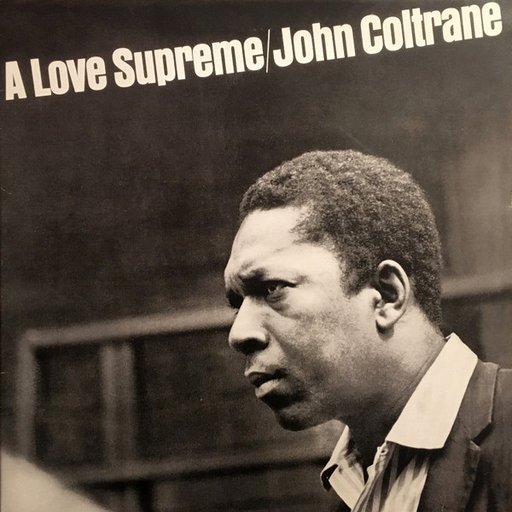
A Love Supreme (1965)

John Coltrane
A Love Supreme by John Coltrane

Released in 1965, 'A Love Supreme' is a landmark album in the world of jazz, showcasing the profound spiritual journey of John Coltrane. Recorded in a single session at Van Gelder Studio in Englewood Cliffs, New Jersey, the album was released on Impulse! Records and quickly became a critical and commercial success. Coltrane's exploration of spirituality through music resonated with listeners, establishing him as a pivotal figure in jazz. The album has been celebrated not only for its innovative sound but also for its deeply personal narrative and spiritual undertones, making it a touchstone for both musicians and fans alike. Musically, 'A Love Supreme' is significant for its innovative structure and improvisational style. The album is divided into four parts: 'Acknowledgement', 'Resolution', 'Pursuance', and 'Psalm', each contributing to a cohesive narrative arc. The standout track, 'Acknowledgement', opens with the famous four-note motif that serves as a spiritual mantra, setting the tone for the entire piece. 'Resolution' showcases Coltrane's intense saxophone work, while 'Pursuance' features an exhilarating interplay between Coltrane and drummer Elvin Jones. Collectors seeking the 'A Love Supreme' vinyl should be aware of several pressing variations. The original 1965 release in mono is highly sought after, with the black and orange label being particularly desirable. Look for matrix numbers such as AS-77 and the dead wax identifiers that often include 'RVG' for Rudy Van Gelder. Current values range from $20 for later reissues to upwards of $300 for pristine originals. Condition is paramount for this album; look for minimal surface noise and well-maintained jackets, as wear can significantly impact value. Collectors are drawn to 'A Love Supreme' not only for its musical brilliance but also for its cultural significance in the jazz canon. As a reflection of Coltrane's spiritual quest, this record has become an essential piece of vinyl history, making it a must-have for both seasoned collectors and newcomers alike.

Standout Tracks:
  • Acknowledgement
  • Resolution
  • Pursuance
Pressing Notes: Original 1965 mono pressing with black and orange label is highly desirable. Look for matrix AS-77 and 'RVG' in the dead wax.
Value: $20-$300 Collectibility: High

Vinyl Collector Tip #80

Cleaning

Mastering Vinyl Care for Longevity

Cleaning your vinyl records is crucial for preserving both their sound quality and investment value. Dust, fingerprints, and grime can degrade audio performance, leading to pops and skips that detract from your listening experience. You should invest in a quality record cleaning solution and microfiber cloths, which can effectively lift dirt without scratching the surface. For deeper cleaning, consider using a record cleaning machine, which can range from $100 to $500, but protects your records' $100+ value by ensuring they remain in pristine condition.

To clean your vinyl, start by gently brushing the surface with a carbon fiber brush to remove loose dust. Then, apply a few drops of your cleaning solution to a microfiber cloth and wipe the record in a circular motion, following the grooves. Always clean from the center outward to avoid putting pressure on the outer edges. This method not only enhances sound quality but also extends the life of your records.

Remember, the environment matters too; store your records vertically in a climate-controlled space to avoid warping. Regular cleaning not only maintains the aesthetic appeal of your collection but also preserves its value over time.

Pro tip: Consider using a distilled water and isopropyl alcohol solution for a DIY cleaning option that’s effective yet gentle on your vinyl.

Pro Tip: Use a distilled water and isopropyl alcohol mix for effective DIY cleaning.

Vinyl Market Pulse

↑ Up

Soul Vinyl: Market Trends for 2026

The vinyl market for Soul records has seen a remarkable surge in interest this year, driven by a blend of nostalgia, high-profile artist deaths, and a resurgence in reissues. Original pressings of classics like Marvin Gaye's 'What's Going On' have skyrocketed, now fetching over $200, up from just $50 last year. The allure of Soul music, characterized by its emotive sound and rich history, continues to captivate collectors, particularly with recent documentaries shedding light on iconic figures in the genre. As more people turn to vinyl as a tangible investment, Soul records have become a hot commodity. Collectors should focus on original pressings and significant reissues from labels like Motown and Stax, as these are likely to appreciate in value. Albums from artists like Aretha Franklin and Otis Redding are also safe bets. Selling lesser-known titles or standard reissues can help fund these more lucrative investments. Looking ahead, the outlook appears positive; as the nostalgia for classic Soul persists and the vinyl format remains popular, prices are expected to continue on an upward trajectory. Investing in Soul vinyl not only offers the chance for financial gain but also enriches your listening experience with timeless music.

Hot Artists: Marvin Gaye, Aretha Franklin, Otis Redding

Genre Spotlight

New Wave

The Essential Guide to New Wave Vinyl Collecting

New Wave emerged in the late 1970s as a dynamic genre that combined elements of punk rock, pop, and electronic music, giving birth to a sound that was both innovative and commercially viable. Often associated with the rise of synthesizers and the DIY ethos of the punk movement, New Wave became a defining genre of the 1980s. Its origins can be traced back to bands experimenting with avant-garde sounds, leading to the genre's golden era characterized by catchy melodies and a penchant for theatricality. Movements such as synth-pop and post-punk played pivotal roles in shaping the New Wave landscape, leading to a rich catalog of music that continues to resonate today.

When it comes to essential artists in New Wave, a few names stand out. First, we have Talking Heads, known for their eclectic sound and artistic music videos that redefined visual storytelling in music. Second, Blondie, whose fusion of punk and disco led to chart-topping hits like "Heart of Glass." The B-52's brought a quirky, fun vibe with their distinctive sound, while Depeche Mode pioneered the use of synthesizers, creating timeless tracks that still captivate listeners. Duran Duran, with their glam aesthetics and catchy hooks, defined the MTV generation, while The Cure's melancholic melodies and goth influences added depth to the genre. Lastly, Gary Numan brought sci-fi themes to the forefront with his groundbreaking album "Speak & Spell."

For collectors, several must-own albums define the New Wave genre. First on the list is "Speak & Spell" (1981) by Depeche Mode, featuring the hit “Just Can't Get Enough.” Next, Blondie's "Parallel Lines" (1978) is a quintessential album that showcases the band's unique blend of styles and produced classics like “Heart of Glass.” The B-52's self-titled debut (1979) is another essential, bursting with energy and creativity. Duran Duran's "Rio" (1982) is a staple for its infectious hooks and iconic tracks like “Hungry Like the Wolf.” Finally, "Remain in Light" (1980) by Talking Heads is a landmark album that pushed the boundaries of what New Wave could achieve.

When collecting New Wave vinyl, it's essential to pay attention to pressing info, labels, and rare variants. Look for first pressings, which are often marked with unique identifiers on the label. Labels like Sire, EMI, and Chrysalis are notable for their association with many New Wave acts. Additionally, limited edition colored vinyl or picture discs can significantly increase a record's value.

As of now, the market for New Wave vinyl records is thriving. Collectibility is high, with price ranges varying widely, from around $

Featured Rarity

Why This Album Is Worth Thousands

Blonde on Blonde by Bob Dylan (1966)

Bob Dylan's "Blonde on Blonde" is not just an iconic album; it's a cornerstone of vinyl collecting. Released in 1966, this double LP was groundbreaking in its fusion of rock and folk, and it marked Dylan's artistic evolution. Collectors are drawn to its value for several reasons, including its unique sound, lyrical depth, and historical significance. The first pressing of this masterpiece, particularly the original US Columbia Records version with the matrix number "AL 2400" and the iconic '360 Sound' label, can fetch high prices, often ranging from $1,500 to $25,000, depending on condition and rarity.

Among the pressing variants, the original UK pressing on CBS is also sought after, sometimes valued at $500 to $2,000. Some collectors hunt for the rare first pressing with the error track listing on the back cover—something that adds intrigue and desirability.

What's fascinating is that "Blonde on Blonde" was one of the first double albums in rock history, which adds to its collectibility. True fans and collectors will also look for specific features: the label details, matrix numbers, and even the deadwax inscriptions. A variant with clean artwork, no ring wear, and intact spine can significantly increase value. In the thriving world of vinyl collecting, this album stands out as a must-have for serious collectors. Its rich history and musical genius ensure that every spin on the turntable is a journey back in time, making it an investment that you can actually enjoy. Don't miss your chance to own a piece of musical history!

Current Market Value: $1,500-$25,000