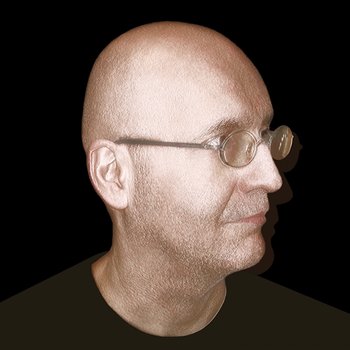
Allan Gutheim is a Swedish electronic music composer born on November 13, 1962, in Vantör, Stockholm, Södermanland. Currently residing in Osby, he comes from a family with Parisian roots, as his parents moved to Sweden in the 1950s. Gutheim has been married since 1990 to Maria Gutheim (née Lindstedt), and together they have three children: Alexandra (born 1991), Paula (born 1993), and Nathalie (born 1995).
Gutheim's musical foundation is deeply rooted in classical training, having dedicated 15 years to studying piano, music theory, and composition. His diverse body of work includes music for films, theater productions, ballets, art exhibitions, and multimedia projects. Additionally, he has authored books on music theory and the Swedish music industry.
He began playing the piano at the age of seven but shifted his focus from classical music to composition in the mid-1970s. By 1976, he had become the youngest composer at Elektronmusikstudion, a Swedish professional studio specializing in electro-acoustic music and sound art. Notable early compositions include "Dygnet" (The Day), a ballet score for the Stockholm Opera in 1977, and "Gryning" (Dawn), an electronic piece for the Electronic Music Fair in 1979 at Fylkingen, one of the oldest associations for experimental music and art.
From 1983 to 1992, Gutheim served as the primary instructor in music theory and digital music production at Kulturama, Sweden's largest post-secondary school for artistic studies. During this time, he also composed for the feature film "Hägring" (Mirage) and several ballets, theater productions, and multimedia works. In 1986, he published "Grundläggande Musikteori" (Basic Music Theory), an educational resource.
In the 1970s, Gutheim worked with cutting-edge equipment at Elektronmusikstudion, utilizing the advanced Buchla synthesizer. He transitioned to MIDI technology in the 1980s and began recording on the Atari 1040ST computer using Steinberg Pro-24/Cubase software. In 1988, he founded Allan Gutheim Music Production and constructed a studio in Stockholm, designed by renowned acoustic designer Ingemar Ohlsson, known for his work with the ABBA studio. This studio catered to both music production and educational activities, producing several phonograms before its sale in 1996.
His extensive experience as a composer, musician, producer, and educator culminated in the publication of "Den Svenska Musikbranschen" (The Swedish Music Industry) in 1996. Following this, he became an active lecturer and consultant on music industry-related legal rights and contracts. The demands of managing the administrative aspects of the book, particularly after the fifth revised edition in 2001, led to a hiatus from music creation, compounded by his relocation to Skåne in southern Sweden in 2005.
In addition to his musical endeavors, Gutheim and his wife Maria founded Toy World Sweden in 1999, an experience museum where he serves as director and artistic leader, overseeing events and exhibitions featuring a vast collection of toys, music, sound, light, and motion effects.
In 2013, Gutheim collaborated with the art duo Unda Arte, resulting in "Postmodern Substrata," an exhibition and art portfolio that combined their visual works and texts with Gutheim's music. This collaboration marked his return to music.
Between 2013 and 2018, Gutheim's music was released by The Sublunar Society. Initially, these releases consisted mainly of previously recorded works from the 1980s and 90s. His distinct personal style emerged in the albums "Sequencer" (2017) and "Waves" (2018), which blend modern instrumental electronic synth music with ambient influences reminiscent of the 1980s. All of Gutheim's music is produced at Real Time Studio (2) and has been released by Real Time Music (3) since 2019.