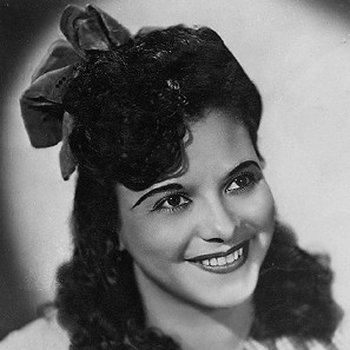
Savannah Churchill, an influential figure in the rhythm and blues and pop genres, was born Savannah Valentine on August 21, 1920, in Colfax, Louisiana. She was the only child of a railroad worker who transitioned from the Missouri Pacific to the Pennsylvania Railroad, which spurred the family's relocation to Brooklyn, New York, in 1926 during the significant migration of African Americans from the rural South to urban areas.
After graduating from Girls' High School in Brooklyn in 1937, she married David Churchill, adopting his surname. The couple had two sons, Gregory, born in 1938, and Michael, born in 1940. During this time, Savannah largely set aside her passion for singing to focus on her family and pursued dress design studies at New York University. Tragedy struck in 1941 when her husband died in a car accident, prompting Savannah to seek a career in music to support herself and her children.
Savannah approached the prominent Big Band leader Benny Carter, who recognized her talent and employed her as the female vocalist for his band. Her versatility allowed her to shine in both jump blues and ballads, leading to a series of recording opportunities.
In 1942, she recorded her first two records for Joe Davis' Beacon label, credited initially as "Jimmy Lytell and his All Star Seven, Vocal Refrain by Savannah Churchill." Both records became successful, selling hundreds of thousands of copies, and her growing popularity led Davis to rebrand future releases as "Savannah Churchill and her All Star Seven."
Savannah continued to collaborate with Benny Carter's Orchestra in 1943, recording at least five tracks, which culminated in two releases on Capitol Records, featuring her vocals. In 1945, she signed with Manor Records, where her third record, "I Want To Be Loved," featured the male vocal group the Sentimentalists—who would later evolve into the Four Tunes. Pat Best, a member of the group, played a significant role in the song's success, having written it and guided Savannah's performance.
Following this, most of Savannah's recordings included male vocal group accompaniment. She released two records on Manor with the Five Kings, followed by eight records on Manor and one on Arco, often featuring the Four Tunes. Arco emerged as the new label name for Manor in late 1949. In 1950, she released two more records on Arco and additional tracks on Regal in late 1950 and early 1951, backed by the Striders.
In 1948, Savannah recorded two tracks for Columbia that were initially intended for Manor but remained unreleased at the time. The following year, she signed with RCA Victor, resulting in five releases, all featuring vocal group support. Her first release was backed by the Four Tunes, followed by three tracks with the Striders, and her final RCA Victor release included a pickup group. In 1951, she performed at the London Palladium alongside the Striders.
Savannah transitioned to Decca in 1953, yielding five releases. The first was a solo effort, while the subsequent records featured vocal groups, including two with the Ray Charles Singers and two with an unidentified quartet.
In 1956, she made a notable release on Argo, a subsidiary of Chess Records, with both sides supported by a vocal group, believed to be the Four Tunes.
By 1960, Savannah recorded an album titled "Time Out For Tears" for Philadelphia's Jamie label, which featured fresh arrangements of some of her earlier hits, along with a single that included two tracks from the album.
Savannah Churchill passed away from pneumonia on April 20, 1974, leaving behind a remarkable legacy of quality recordings that spanned four major labels.