
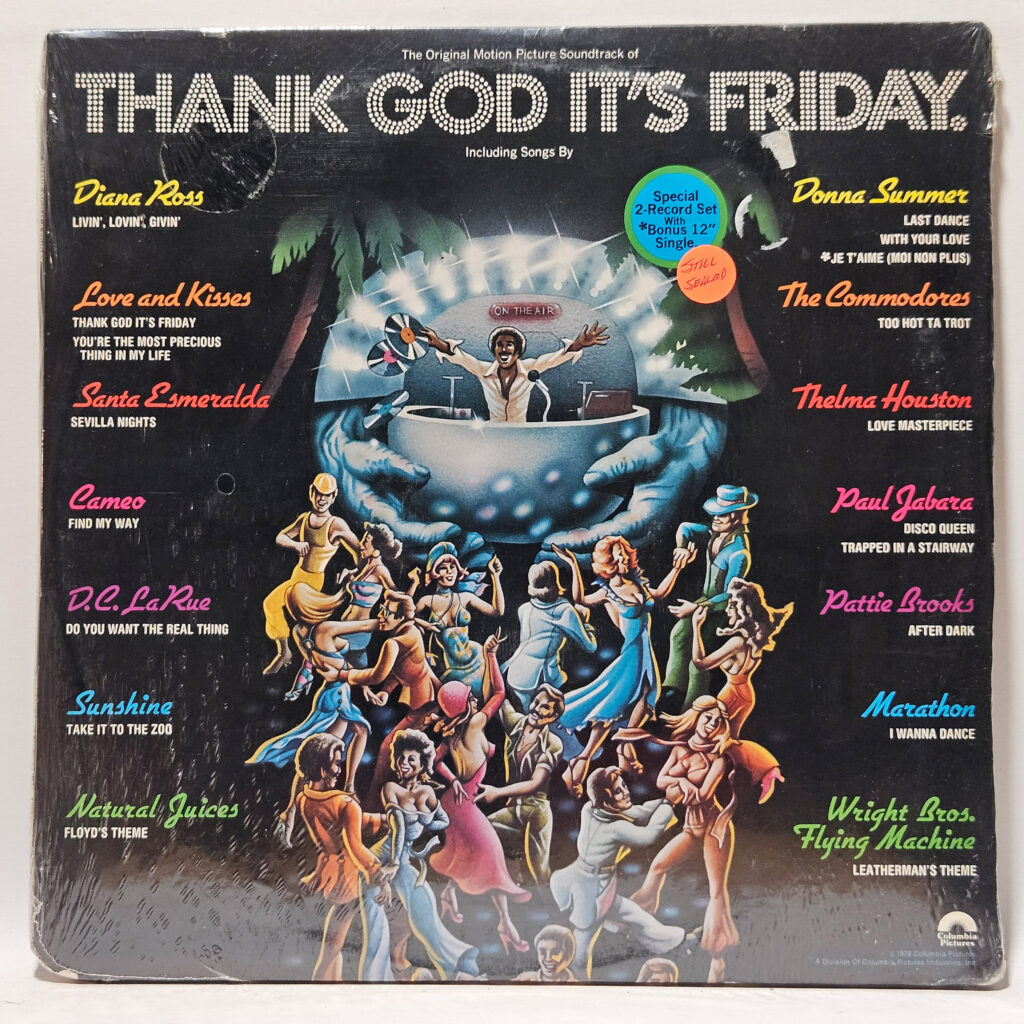
Sealed records have an aura about them. I’m at the point where I really, really, really have a hard time opening one; that tight shrink, the unbroken promise, the idea that whatever’s inside has been frozen in time since the day it left the plant. Particularly NOS from the 60’s and 70’s. People see sealed and assume perfect. They assume untouched, flawless, immune to the problems that plague used copies. That assumption is where the disappointment starts. I have been severely disappointed.
A sealed record tells you exactly one thing with certainty: it hasn’t been opened. That’s it. It does not tell you how it was pressed, how it was stored, how flat it is, how centered it is, or whether the person running the press that day was paying attention. Shrinkwrap is not a force field. It doesn’t prevent warps, off-center pressings, non-fill, or surface noise. It just hides them until you’ve already committed.
Records don’t age gracefully inside shrink. Vinyl wants to relax; shrinkwrap wants to constrict. Leave the two together long enough and something gives. Sometimes that means dish warps. Sometimes it means edge warps. Sometimes it means a jacket that looks like it’s been vacuum-sealed for decades, because it has. None of this requires abuse. Time is enough.
Pressing defects don’t care whether a record was ever played. Non-fill happens at the press, not on your turntable. Off-center holes are drilled that way from the start. No amount of careful ownership fixes a record that was born wrong. Opening a sealed copy and discovering a repeating thump or tearing noise is a special kind of disappointment, because now the myth is gone and the return window usually is too.
Then there’s the assumption that sealed equals better sounding. It often doesn’t. Plenty of sealed records were cut from questionable sources, rushed through production, or pressed during eras when quality control was more of a suggestion than a standard. Meanwhile, a well-cared-for used copy from an earlier run can sound phenomenal. Quiet vinyl doesn’t advertise itself with shrinkwrap; it earns its reputation on the platter.
Jackets don’t escape unscathed either. Sealed jackets still get corner dings, seam stress, ring wear, and spine compression. Shrink can trap moisture, imprint hype stickers permanently, or leave marks that no cleaning will ever fix. You can open a sealed record and find a jacket that looks worse than a carefully handled used copy that’s lived its life on a shelf.
Sealed records aren’t bad. They’re just misunderstood. They’re a gamble wrapped in plastic, and the odds aren’t always as favorable as people think. Sometimes you win. Sometimes you open it, flatten it, clean it, drop the needle, and realize you paid extra for the privilege of discovering a flaw you could have spotted immediately if the wrap had been gone.
At SRO Records, sealed is treated as a condition, not a promise. It means unplayed, not unimpeachable. A great record is a great record because of how it was made and how it survived, not because no one ever broke the seal. Vinyl lives in the real world, even when it’s wrapped in plastic, and the sooner people accept that, the fewer surprises they’ll have after the shrink comes off.
